Categories Blog

AMANI INITIATIVE QUARTER THREE, 2026 NEWSLETTER

ย 

AMANI INITIATIVE NEWSLETTER
Quarter 3, 2026
July โ€“ September ย |ย  Maracha โ€ข Arua โ€ข Mpigi โ€ข Wakiso

Hello from all of us at Amani

Three months go by quickly in this work. Between 1st July and 30th September we ran six projects , across Maracha, Arua, Arua City, Mpigi and Wakiso, and our teams were rarely in the office. They were in classrooms, village compounds, farms and building sites.

This issue is our way of sitting down and telling you what happened. Some of it went well. Some of it is still unfinished, and we have tried to say so honestly. September also marked the end of the BRIDGE project, so you will find a lot about Tara Sub-County in these pages.

Amani was started in 2012 in Maracha on a simple belief: everyone deserves an equal opportunity to reach their full potential. Everything below comes from that. Near the end you will also find an invitation to join our Pad a Girl run on 21st November.

6
projects running this quarter
76.9%
average attendance at life skills sessions
UGX 4.12M
school fees paid for 5 girls
119
schools trained in Mpigi & Wakiso

Life skills in 20 schools: Dream Achievers

Dream Achievers is our two-year programme with 20 primary schools across Maracha, Arua and Arua City. It aims to reach 600 vulnerable learners, 500 girls and 100 boys, and the goal is simple: keep them in school, help them finish, and build their confidence along the way. The life skills sessions were implemented as part of the Girls Opportunity Alliance.

Between 13th July and 30th September we held three life skills sessions, each with its own theme:

  • Session 7: Knowing my Rights and Responsibilities
  • Session 8: Child Marriage and Teenage Pregnancy
  • Session 9: My Opportunities, My Plans

The sessions above aimed to improve the school learning environment and promote equitable, safe, and quality education for both girls and boys by equipping learners with essential life skills, information child rights and responsibilities, self-confidence, and knowledge to prevent child marriage, gender-based violence, and other forms of abuse. The sessions also sought to strengthen learners’ decision-making, communication, and problem-solving skills while encouraging positive behavior and healthy relationships.

424
learners at Session 7 (70.7%)
471
learners at Session 8 (78.5%)
490
learners at Session 9 (81.7%)
45
learners with disabilities taking part
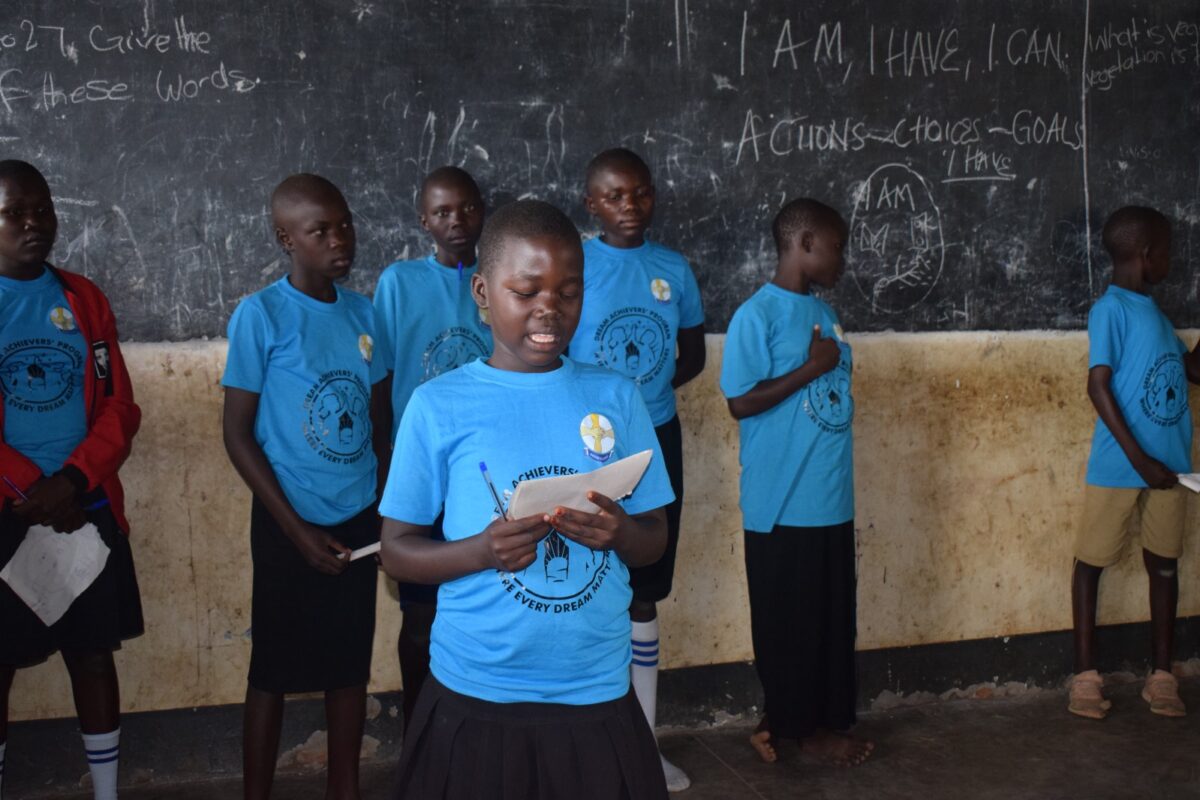
Learners sharing ideas during a life skills session.
Girls enjoying a light moment together after a session.

Learner clubs and their small businesses

This work was done under Empowered Voices, supported through the Girls First Fund. Members of the Cohort 2 Dream Achievers clubs set up 20 social enterprises, one for each of the 20 school clubs, and this quarter we went back to see how they were doing. Follow-up sessions in every school showed that all 20 enterprises are still running.

A tomato garden run by one of the Dream Achievers clubs.

Turnout at the follow-up sessions was lower than we hoped. We reached 326 of the 500 learners targeted (182 girls, 144 boys, 8 with disabilities), which is 65.2%. We will work with the schools to bring more club members into the next round.

Keeping Me In School: fees support

Five girls at risk of child marriage or teenage pregnancy had their second-term 2026 school fees paid by Amani this quarter with the support of individual sponsors under our Keep Me in School campaign. The total was UGX 4,120,000.

Name School Level Fees (UGX)
Hope St Johns Girls SS, Nyoro Secondary 246,000
Britney Makerere University Business School University 2,284,000
Fridah St Stephen’s C.O.U. Primary, Kisungu Primary 530,000
Marion St Stephen’s C.O.U. Primary, Kisungu Primaryย  530,000
Blessing St Stephen’s C.O.U. Primary, Kisungu Primaryย  530,000
Total 4,120,000
With 26% of children aged 6-12 years out of school, and 45% of primary school children dropping out before completing their education. You can also sponsor a child to stay in school by reaching out through info@amaniinitiative.org.

BRIDGE project: the final stretch in Tara

BRIDGE (Building Resilience, Inclusion, Development, Growth and Empowerment) ran for two years, from October 2024 to September 2026, with support from the FEMI Foundation. It helped 35 vulnerable women in Tara Sub-County, Maracha District, to move out of extreme poverty. The women came from Wanguru, Vurra, Anyivu, Yidu and Pajama parishes. Among them were 13 women living with or caring for children with disabilities, 13 widows, 4 child mothers and 5 women living with HIV.

Here is what the last three months looked like.

Walking the households

In September our team visited all 35 households for the household SWOT review, reaching 96 people (69 women, 27 men, 5 with disabilities) across Anyivu, Wanguru, Pajama, Yidu and Vurra parishes. At every home we asked the same things. What did you plan last time? Did it happen? If not, what got in the way? Families then talked through how to improve the businesses they had started, with our facilitators guiding rather than dictating.

The activity strengthened households by reviewing progress on prior action points, reinforcing completion of ongoing initiatives, and supporting mindset change toward sustainable economic growth.

Discussions assessed business ideas, identified challenges, and jointly developed practical solutions. New action points were agreed upon to improve and expand household enterprises, with active participation from members present, including persons with disabilities.

It was also exciting to learn that the endline results demonstrate significant improvements in womenโ€™s empowerment and wellbeing. Decision-making and empowerment increased from 54% at baseline to 91%, while access to social support rose from 38% to 87%. Psychosocial wellbeing improved from 35% to 90%, reflecting greater hope, confidence, reduced stress, and stronger belief in their ability to achieve personal and economic goals. These gains were reinforced through household visioning, goal-setting, and regular follow-up. By the end of Year 2, all 35 women had achieved at least two of their three set goals, demonstrating meaningful progress towards greater independence, resilience, and sustainable livelihoods.

Learning from a model farmer

On 19th September, 22 beneficiaries (18 women, 4 men) gathered in Anangaku Village for a mentorship session led by a model farmer. He took them through land preparation, planting, weeding, pruning, staking, thinning, pest control, post-harvest handling, and how to work out whether a crop is actually making money. The session ended with open questions about the problems people face in their own gardens.

Turnout was 62.9% of those invited. Farm work, funerals, illness and clan events all competed for people’s time that week. That is real village life, and we plan around it.

Exposure visit to Wole Mixed Farm

On 22nd September, 35 people travelled to Wole Mixed Farm in Okokoro Town Council: 29 beneficiaries, 3 community facilitators and 3 Amani staff. That was 85.4% of the 41 we had invited. Between them they saw piggery, poultry, goats, rabbits, fish farming and vegetable growing, learned how to make local pesticides, and went through the cost-benefit numbers for each enterprise.

One practical result: Siyava Seeds, an input dealer, pledged to supply participants with hybrid seeds.

Participants at Wole Mixed Farm, Okokoro Town Council.
Walking through the vegetable plots.
A hands-on demonstration during the visit.
Looking at how livestock are housed and fed.

The end line survey

From 1st to 30th September we went back to all 35 women for the end line survey, one household at a time, through conversation and observation. We asked how their homes and incomes have changed, whether they are using what they learned, what services they can now reach, and what plans they have to keep going now that the project is over. The headline results are just below, and the full findings will be in our BRIDGE impact report.

A beneficiary during the end line survey.
Goats at a beneficiary's home.
Goats at a beneficiary’s home.
A goat shelter at a household.
Chickens at a beneficiary's home.
Chickens at a beneficiary’s home.

What two years of BRIDGE changed: endline results

The end line survey numbers tell a clear story. Overall resilience among the women in the project rose from 37.7% to 89.4%. Every single woman improved, by anywhere between 19 and 77 percentage points, and none of them remain in the Low resilience band. Thirty-one women are now highly resilient and four are moderately resilient.

37.7% โ†’ 89.4%
overall resilience, baseline to endline
35 of 35
women improved; none remain in the Low band
31
women now highly resilient (4 moderate)
35 of 35
women now run an income-generating activity

Every area we measured passed the 75% high resilience mark. The biggest jump was in food security, from 35% to 93%. Decision-making started highest, at 54%, and still climbed to 91%.

Chart comparing baseline and endline scores for eight resilience areas. All eight areas rose above the 75% high resilience threshold.
Average score by area, baseline versus endline (% of maximum).
Area Baseline Endline Change (points)
Economic capacity 35% 91% +56
Financial management 38% 91% +53
Food security 35% 93% +58
Access to services 31% 84% +53
Social support 38% 87% +49
Decision-making 54% 91% +37
Coping capacity 35% 87% +52
Wellbeing 35% 90% +55

One more number we are proud of: all 35 women now run an income-generating activity, including nine who had none at baseline.

What we delivered over the two years

All seven planned activities were carried out. Here is how the two years looked in practice:

  • The project launched with 88 participants.
  • Eight household goal-setting visits were held with each of the 35 households, using a household journaling exercise that engaged more than 180 household members. Every household managed to achieve at least 2 of its 3 set goals, and cohesion among household members grew as well.
  • UGX 35 million in start-up capital. Each household received UGX 1,000,000, 70% in December 2025 and 30% in February 2026, backed by 35 business plans. Women invested in livestock, produce trading, tailoring, grinding services, retail and farming, supported by mentorship visits.
  • Women saving together. The Tara Ojataa Women’s VSLA, registered with the Sub-County, saved at least UGX 8,281,000 (2,238 euros) over the two years and put aside UGX 812,000 in social funds. All the money saved was lent out among members to meet their personal needs, including investing in their income-generating projects.
  • Skills that earn. Eleven training sessions covered budgeting, record keeping, pricing, branding, mobile money, digital safety and positive parenting. Hands-on training covered bread, mandazi, doughnuts, liquid soap, smearing oil and briquettes, plus a piggery session with a local veterinary officer.
  • A group business that works. OjataaCare Liquid Soap started as a group enterprise and has sold over 900 litres, earning more than UGX 830,000 (224 euros) in profit. The members make the soap themselves and make the sales themselves.
  • Learning from working farms. Visits to RAMIC Agro-Investment Farm in Arua (38 participants) and Wole Mixed Farm in Maracha, plus a crop husbandry session with a local model farmer, built farming and marketing skills. The Arua visit created three new supplier links: Agrigate, Hendrik and Earth Feeds.
  • Inclusion support reached women with disabilities and the children of beneficiaries. It included assistive devices such as white canes, Micro Cellular Rubber (MCR) shoes and tricycles, and the construction of a house and latrine.

Success story: OjataaCare Liquid Soap

Success story

OjataaCare Liquid Soap began as a group enterprise. The members learned to make liquid soap in a skills training, they now make it themselves, and they do the selling themselves too. So far they have sold over 900 litres and earned more than UGX 830,000 (about 224 euros) in profit.

It is not a huge sum, but it came from the group’s own work, and the money is theirs to decide on. We are proud of them.

Case study: Milda’s home

Milda lives in Adiria Village, Anyivu Parish, Tara Sub-County. She is visually impaired and one of the 35 women in BRIDGE. When our team visited to assess her needs, they found she had no bed and was sleeping in discomfort. Her old grass-thatched house was worn down, her bathing shelter was little more than dried stalks and a sack, and she had nowhere lockable to keep her documents and few belongings, which matters a great deal when you cannot easily see if something has gone missing.

Before the construction

BEFOREMilda's old grass-thatched house.
Milda’s old grass-thatched house.
BEFOREHer old bathing shelter: dried stalks and a sack for a screen.
Her old bathing shelter: dried stalks and a sack for a screen.
BEFOREAnother view of the old bathing space, with unfinished walls and no roof.
Another view of the old bathing space, with unfinished walls and no roof.

Between July and September the project responded in three ways:

  • It gave her a bed, so she can rest properly.
  • It gave her a lockable sideboard for her items and documents.
  • It renovated her main sleeping house and built a two-stance pit latrine with a bathing shelter, replacing structures that were falling apart. The latrine is complete and already in use.

After the construction

AFTERMilda's renovated sleeping house, with her new bed in front and the new latrine behind.
Milda’s renovated sleeping house, with her new bed in front and the new latrine behind.
AFTERThe plastered, roofed house from the side.
The plastered, roofed house from the side.
AFTERThe new two-stance latrine and bathing shelter, plastered and painted.
The new two-stance latrine and bathing shelter, plastered and painted.

None of this is dramatic. It is the basics of a safe, private and dignified home, which is exactly the point. Compare the photos above and you will see why we do it.

Homes, latrines and clean water for five households

The five women in this part of BRIDGE have each started an income-generating activity, joined a savings group and received regular mentorship from our team. But their incomes are still too low to cover the deeper needs: a decent home, a proper latrine and clean water. Through โ‚ฌ6,500 raised in the Cool Classic Challenge Rally, brought to us by our partner FEMI Foundation, we started fixing that in Tara Sub-County, and the work ran through August and September.

โ‚ฌ6,500
raised through the Cool Classic Challenge Rally
5
households supported
4
plastered two-room houses with latrine and bathing shelter
1
house repair under way

Where the work stands

  • Materials are on site at all five households: sand, cement, bricks, doors and windows, so building is moving everywhere.
  • Four households now have a plastered two-room house and a two-stance latrine with a bathing shelter. Only painting, floor finishing and fitting the doors and windows remain. The doors and windows are already bought and waiting on site.
  • One household is having her current house repaired. The plastering, doors and windows are done, and her latrine and bathing shelter are under construction.

The women behind the progress

  • Agnes (48, Adiria Village) cares for four children and her elderly mother. Their old house was falling apart and she could not repair or rebuild it alone. It has been replaced by a plastered two-room house, with a new latrine and bathing shelter.
  • Molly (36, Olua Village) is raising five children without their father, three of them with disabilities. Her family went from one inadequate room and no working latrine to a plastered two-room house with a new latrine and bathing shelter.
  • Kumcheta (45) joined the programme in place of Abiru Lucy. She was living in an unfinished, poorly ventilated house. Repairs are under way: the plastering, windows and doors are done, and her latrine and bathing shelter are being built.
  • Grace (49, Roma Village) is the only provider for seven dependants, including grandchildren. Her collapsing house is being replaced by a plastered two-room house, with a new latrine and bathing shelter.
  • Suzan (59, Kijigbe Village) looks after eight children and grandchildren. Her plastered two-room house, latrine and bathing shelter are in place.
A new two-room house taking shape: roofed and plastered, with windows and doors ready to be fitted.
A latrine and bathing shelter under construction, walls going up.
Builders laying bricks for a latrine at one of the households.
A new house going up beside the old one that was falling apart.
Still unsolved: safe water

Suzan’s household still has no safe water. The nearest well is 500 metres away. It is unprotected and shared with animals, which exposes families to waterborne disease. We have put the water point on hold until a suitable source is verified, because the current well has a low yield and could dry up if we protect it. We would rather get this right than spend the money twice.

Training school leaders in Mpigi and Wakiso

Many schools struggle with money management more than anything else: fees that are not properly recorded, budgets that are guesswork. Through the Edify partnership we ran the Business Accounting, Finance and Fees Collection Policy training for school leaders and bursars, covering accounting, budgeting, record keeping and accountability.

119
schools trained (Wakiso 34, Mpigi 85)
162
schools targeted
73.5%
of target reached

The remaining schools are scheduled for the coming months. Operational and logistical challenges held us back, and we would rather do it properly than rush.

A girl we could not find

We want to share one visit that did not go the way we wanted. On 24th September a team from Amani, a school representative and the girl’s close friend went to Adongoro Cell in Maracha Town Council to look for a pupil who had dropped out of school after becoming pregnant. We hoped to counsel her and help her return to school.

Neighbours told us she had left home after discovering her pregnancy, and nobody knew where she had gone. Her parents were away on farm work in Koboko, so we could not speak to them either.

We include this because it shows what we are up against. Behind many of our statistics are girls who disappear when they most need someone. We are not giving up on her.

New work starting

  • Empowered Voices 3.0 (Capital for Good, through the Girls First Fund) began on 1st August 2026 and runs to 31st July 2027, covering Kijomoro, Oleba and Oluffe Sub-Counties in Maracha, Vurra Sub-County in Arua, and Arua City. Our first task was following up the cohort one Dream Achievers’ clubs.
  • Women Voice and Leadership (CARE) will work in Oluvu, Tara and Maracha Town Council. We held the consortium kick-off meeting and a partner engagement meeting this quarter.

Collaboration: working alongside others

No single organisation can change West Nile on its own. A good part of our quarter was spent sitting in rooms with partners, comparing notes, checking each other’s work and planning together. Here are five moments worth sharing.

6
organisations in the WVL West Nile consortium, with CARE
12
pillars assessed in the QuAMPlus validation
4
community leader selection committees reviewed
5
partner organisations visited for TACT tools

1. Peace partners review meeting in Arua

We joined women leaders, peace activists, peace advocates and market vendors from Arua City and Arua District for a review meeting convened by Feminature Uganda and the Women’s Situation Room. The meeting was held at a cafeteria in Arua and brought together members of the Peace Partners network to reflect on community-based conflict resolution and peacebuilding work across the region.

Our main focus was the Terms of Reference for the four committees formed to select community leaders. We went through their roles and responsibilities and began drafting a work plan to help get them fully working. It was encouraging to see market vendors sitting alongside women leaders and peace advocates, all pulling towards the same goal: safer, more peaceful communities built from within.

Peace Partners network members after the review meeting in Arua.

2. Women’s Voice and Leadership: Year 3 kick-off

On 18th September 2026 we had the honour of convening the Women’s Voice and Leadership (WVL) West Nile Consortium for its Year 3 kick-off meeting in Arua. We do this as Consortium Lead for West Nile.

Six organisations were in the room: Amani Initiative, COTA, the Mentoring and Empowerment Programme for Young Women (MEMPROW), Feminature Uganda, Women Effort for Inclusive Development (WEID) and Palma Memorial Health Centre (PMHC), together with CARE International in Uganda. Together we agreed on governance, financial compliance, and our Year 3 joint activities and targets.

We are deeply grateful to CARE for choosing to place leadership in the hands of local organisations. Leading this consortium is a responsibility we take seriously, and it shows what becomes possible when women-led organisations are trusted to drive change in their own communities.

Consortium members at the WVL West Nile Year 3 kick-off meeting.

3. QuAMPlus: validators visit our office

After the online desk review of our QuAMPlus assessment and certification submission, a team of validators came to our office in Maracha for a physical assessment across all 12 pillars.

QuAMPlus, hosted by CARE International in Uganda, introduces a national passporting system: a structured, standard way for organisations to present verified, corruption-resistant data. That makes it easier for donors and partners to find organisations that meet agreed standards of accountability and performance.

The validators verified our systems, controls and processes, reviewed how we generate tamper-proof certification data, and gave us recommendations to strengthen our capacity and credibility. QuAMPlus certification will strengthen the trust we have with government and partners, and it keeps us true to two values we hold close: accountability and integrity.

Amani staff with the QuAMPlus validation team at our office.

4. Excel and financial management training

We recently held an onsite Excel and Financial Management training led by Fred Mwololo (MBA, BA Economics, CPA-K), Regional Programs Finance Manager at FEMI Foundation. It covered accounting concepts, financial reporting, advanced formulas and dashboard creation.

In her words

โ€œThe training demystified formulas and reports I’d always found intimidating. I now feel confident building our own budget dashboards.โ€

Esther, Finance Officer, Amani Initiative

This hands-on session reflects FEMI Foundation’s continued investment in our capacity and sustainability. Stronger systems mean stronger impact for the communities we serve across West Nile.

Hands-on practice during the Excel and financial management training.

5. Visiting our consortium partners: TACT tools

We have visited COTA, WEID, PMHC, MEMPROW and Feminature to review and update our TACT tools. The visits also helped us see each partner’s strengths and weaknesses, which will shape the peer learning sessions on our next visits, and they gave us a chance to look at the capacity building plans under CARE.

A working session during one of the partner TACT tool visits.

What got in the way

We would like to be straight about the difficulties this quarter:

  • Mobilising stakeholders costs money, and the budgets are tight.
  • Prices keep moving. Fuel and construction materials cost more than we planned for, which affects both travel and building.
  • Some harmful cultural norms are still very much alive and slow our work down.
  • There are important priorities we do not yet have funding for.

Going forward, we will leverage unrestricted funds to cover unfunded priorities, add a mobilisation budget line for the local leaders who help us, redirect budget lines hit by inflation, and keep tracking beneficiaries’ businesses so that the gains last.

Run with us: Pad a Girl Maracha

SAVE THE DATE
Saturday, 21st November 2026
Maracha District Menstrual Hygiene Run
(Pad a Girl Maracha, Second Edition)
Starting point: Bura Primary School
โ€œTogether for Menstrual Hygiene: Every Mile for Her.โ€
Some of our team in their Pad a Girl Maracha running kits.

In West Nile, including Maracha, many girls miss school or drop out because of their periods. Toilets and washrooms at school are poor, sanitary products cost too much for many families, and the stigma around menstruation is still strong. When a girl misses a few days every month, she falls behind, and many never catch up.

That is why we are joining the run on 21st November. Come run, walk, or cheer. Bring a friend, a colleague, or your family. Every kit and every step helps keep a girl in school with dignity.

Running kits are still available

To get yours, call or WhatsApp any of these numbers:

๐Ÿ“ž 0771 136 119 ย |ย  0782 628 840 ย |ย  0777 371 289 ย |ย  0772 973 997

Who we are

Our philosophy: Amani Initiative stands for the basic belief that everyone deserves an equal opportunity to reach their full potential.

OUR VISION
A world where every child and woman is safe, and empowered to thrive with dignity.
OUR MISSION
To prevent and respond to harmful practices and barriers against children and women through integrated, community-led interventions.

Our values

  • Community: We believe in solutions built with, not for, the people we serve.
  • Integrity: We act with honesty, fairness, and respect in all we do.
  • Accountability: We are transparent and responsible stewards of the trust and resources given to us.
  • Teamwork: We collaborate, learn, and grow together for greater impact.
Walk with us

Whether you can support a child’s school fees, partner with us, volunteer, or simply share this newsletter, we would love to hear from you.

Get in touch
Amani Initiative
Head Office:-Adongoro Cell, Maracha Town Council.
P.O.BOX 610029, Maracha, Uganda |ย  Tel: +256 393102379
info@amaniinitiative.orgย  ย www.amaniinitiative.org
Categories Blog

35 women. Two years. A bridge out of extreme poverty.

35 women. Two years. A bridge out of extreme poverty.

In Tara Sub-County, Maracha District, the BRIDGE Project walked beside 35 women and their families as they built businesses, savings and confidence. This is what changed.

Implemented by Amani Initiative with the support of FEMI Foundation, October 2024 to September 2026

37.7% to 89.4%Average resilience score, from the start of the project to the end
31 of 35Women now in the highest resilience band. None remain in the lowest.
35 of 35Women now run an income-generating activity, including nine who had none before
UGX 8.28 millionSaved by the women in their own savings group and lent back to members

Tara is a remote, hard-to-reach sub-county of more than 20,000 people. Farming depends on irregular rain. Most people left school at primary level. Where families have little, women and girls carry the heaviest load.

Most of the women we met had no capital, no ready market and no mobile phone. Many had spent years brewing local drink or selling small amounts of food just to get by. Poverty also pushes families toward child marriage and other harmful choices.

BRIDGE did not hand out aid and leave. For two years, Amani Initiative stayed with each household.

Peace: from no business to a growing rice trade

When BRIDGE began, Peace was 22. She had no business, only small-scale farming, and her resilience score was 23%, deep in the lowest band.

Today she buys and sells rice, four to five bags every week, with about UGX 10,000 profit on each bag. She also sells tomatoes, onions and cassava flour. Her goats have doubled from two to four. She keeps piglets and rents land to grow groundnuts and maize.

The profit pays her daughterโ€™s school fees and her own tailoring course. She bought herself a smartphone. She says she now feels confident, independent and respected at home.

Resilience score: 23% to 100%. The biggest gain in the project: 77 points.

How BRIDGE worked

It started at home

Every family sat down with a facilitator, including husbands and children over 14, to name their goals. We returned eight times to check progress, reaching more than 180 family members.

Skills came before money

Eleven training sessions covered budgeting, record keeping, pricing, mobile money, digital safety and positive parenting. Hands-on lessons included bread, mandazi, liquid soap, smearing oil, charcoal briquettes and piggery.

Then start-up capital

Each household received UGX 1,000,000 (about โ‚ฌ256), UGX 35 million in total. The women put it into livestock, trading, tailoring, grinding services and farming.

A group that lasts

The 35 women formed the Tara Ojataa Womenโ€™s Savings Group. It is registered with the Sub-County, has its own constitution and leaders, and meets every two weeks. It keeps going now that the project has ended.

The women also started a group business, OjataaCare Liquid Soap. They make it themselves and sell it directly. So far they have sold more than 900 litres and earned over UGX 830,000 (about โ‚ฌ224) in profit.

Leaving no one behind was part of the plan. Women with disabilities and their children received white canes, protective shoes for those living with leprosy, accessible furniture and tricycles.

The results, in numbers that matter

We measured the same eight areas of household life at the start and at the end, so each woman was compared with her own starting point. Every single woman improved, by between 19 and 77 percentage points.

Of the 27 women who started in the lowest band, 23 are now highly resilient and four are moderate. All eight who started in the middle band are now highly resilient.

All eight areas passed the 75% mark for high resilience. The biggest gains were in income and food security, as women used business profits for food, school fees and healthcare. The total project budget was โ‚ฌ20,891, about โ‚ฌ600 for each woman and her household.

Meet the 35 women of BRIDGE

Behind every number is a woman and her family. Each score below is her average resilience at the start of the project and at the end. Ages are from the start of the project.

Knight Amviko

A 16-year-old running her own household and her own business

Resilience: 22% to 95%

At 16, Knight was a child raising a child, selling foodstuffs for UGX 15,000 to 20,000 a week. With her UGX 1 million start-up capital she bought a sewing machine and became a tailor. She now owns three goats and two pigs, rents land for beans and cassava, and saves UGX 5,000 every week.

Her financial management score rose from 6% to 94%, and decision-making from 31% to 100%. Now 18, she supports her household and decides how the money is used. Her next goal is a second sewing machine.

Agnes Alatiru

Building a better future for her seven children

Resilience: 49% to 89%

Agnes, 33, is a widow raising seven children. She used to brew local drink, earning UGX 15,000 to 30,000 a week, and her children sometimes missed up to 20 school days for lack of materials.

With UGX 1 million she moved into trading paste, cooking oil and simsim. She rents land for cassava, simsim and groundnuts, and owns two goats, pigs and a sheep. Food security rose from 25% to 100% and economic capacity from 30% to 95%.

Still needs support: coping and wellbeing, both at 75%.

Agnes Asibazuyo

From local brewing to a more secure future

Resilience: 35% to 95%

Agnes, 48, was brewing local drink. She was born without fingers, and her children were out of school. With start-up capital and financial literacy skills she diversified. She now sells rice, cooking oil and cassava flour, pays workers to cultivate her beans, cassava and sweet potatoes, and has grown her goats from four to five. She saves UGX 5,000 a week.

She says she now eats every day and feels more confident, with the support of her mother and household. Financial management rose from 13% to 100%, coping from 25% to 100% and wellbeing from 33% to 100%.

Still needs support: social support, at 81%.

Betty Candiru

Rebuilding after an outbreak

Resilience: 29% to 77%

Betty, 37, was separated and relied on local brewing. She now sells silver fish, cooking oil, onions and cassava flour, keeps ducks, and has reunited with her husband. A disease outbreak killed four of her six piglets, but she kept trading and uses part of her income for medical costs.

Food security rose from 6% to 75% and financial management from 13% to 81%.

Still needs support: animal health advice and access to services, so her gains are protected from the next shock.

Beatrice Onikia

From local brewing to selling tea and building a home

Resilience: 30% to 89%

Beatrice, 37, is a widow who used to brew local drink. She now sells tea at the market on market days, keeps goats, pigs, chickens and ducks, grows beans and cassava, and has built a one-roomed grass-thatched house. She lost two of the six goats she bought, yet describes a remarkable improvement in her home and income.

Food security rose from 31% to 100%, financial management from 13% to 94% and coping from 17% to 83%.

Still needs support: decision-making, at 81%, and the long walk to group meetings.

Peace Driciru

From subsistence farming to business and independence

Resilience: 23% to 100%

Peace, 22, had no business. Start-up capital let her begin trading rice, then tomatoes, onions and cassava flour. She doubled her goats, invested in piglets and rented land. She pays her daughterโ€™s school fees, bought a smartphone and enrolled in tailoring school. All eight areas are now at 100%.

Her next challenge: encouraging stronger attendance at weekly group meetings.

Pamela Onziru

From no business to raising 300 chicks

Resilience: 20% to 90%

Pamela, 26, began with no business. She sold sorghum and maize, bought a portable grinding machine from the profits, then reinvested to buy 300 chicks and build a temporary poultry house. Her three goats grew to eight. Economic capacity rose from 10% to 100%, food security from 25% to 100% and coping from 17% to 92%.

Still needs support: financial management, at 75%. Two lost piglets and unpaid customer debts remain challenges.

Eunice Inzikuru

Building on what she already had

Resilience: 52% to 78%

Eunice, 39, was already selling produce when she joined, at 52%. Start-up capital and mentoring helped her add cassava flour, sugar and salt. She owns three goats and two pigs, rents land for cassava and beans, and pays for treatment and household needs from her profits. She says she now always has some money when it is needed.

Wellbeing rose from 50% to 100%, food security from 38% to 81%.

Still needs support: access to services, at 69%.

Juliet Asindiru

A grinding machine and a group that lends a hand

Resilience: 47% to 94%

Juliet, 40, is a widow living with a physical disability. She bought a portable grinding machine and now earns by grinding cassava and sorghum for others. She has bought three goats, three chickens and a pig, saves at least UGX 5,000 a week and borrows from her savings group to support her business. Her income pays her sonsโ€™ school fees, food and medical costs.

Six areas reached 100%, and social support rose from 50% to 94%.

Still needs support: access to services, at 63%.

Lucy Abiru

Growing her livelihood and finding someone to turn to

Resilience: 57% to 94%

Lucy, 40, is a single mother of five who was selling fish. She added cassava flour, doubled her goats from three to six, and keeps 11 chickens. She rents land, pays workers to farm it, and pays school fees for two children. She says she now feels able to report challenges to someone she trusts.

Access to services rose from 38% to 88%, her biggest gain. Economic capacity, food security and decision-making all reached 100%.

Still needs support: social support, at 81%.

Scovia Sakaru

Growing her business and supporting her children

Resilience: 61% to 80%

Scovia, 47, a single mother of four, was already selling silver fish and managing her money well. Over two years she added cooking oil, onions and cassava flour, bought four goats, rents land to cultivate, and pays school fees for three children. One goat died, but another has since had a kid.

Economic capacity rose from 45% to 80% and access to services from 38% to 75%.

Still needs support: food security, at 75%, and some other areas.

Scovia Viko

Growing her business and improving her familyโ€™s mobility

Resilience: 54% to 94%

Scovia is a single mother of three, one of whom lives with a disability. She expanded from selling salted fish into silver fish and invested in goats. She now owns five goats and a sheep, rents land for beans and cassava, has built a grass-thatched house and pays school fees for her two daughters. Her son received a tricycle through the project, making it easier for him to move around.

Access to services rose from 38% to 94%. Five other areas reached 100%.

Still needs support: economic capacity, at 75%.

Joyce Oleru

A full shop from an empty start

Resilience: 44% to 91%

Joyce, 36, a widow and mother of two, had no business. With start-up capital she built a small shop selling sugar, salt and tea leaves. She has bought three sheep, a goat and two piglets, rented land for beans and sorghum, and improved her home. Her two children are in primary school, and she says food, school fees and healthcare are more manageable.

Her economic capacity rose from 0% to 100%. She plans to make liquid soap with another group member.

Still needs support: wellbeing, at 75%.

Jane Avako

From selling mandazi to supporting a daughter in nurse training

Resilience: 44% to 94%

When Jane, 48, lost her husband, she sold mandazi to support her family. With start-up capital, mentoring and financial literacy training, her three goats grew to five, and she now keeps a pig, 11 ducks and 15 chickens. She rents land and employs labourers.

Her income pays tuition for her daughterโ€™s nursing training, and her daughter has started supporting her financially. Jane plans to expand further.

Vivian Enzaru

From selling groundnuts to a more secure future

Resilience: 40% to 94%

Vivian, 29, was selling groundnuts. With capital, training and mentoring she added charcoal, bought three goats and three pigs, and used income from selling piglets to build a shelter for her goats and sheep. She rents land for cassava, maize and beans and pays school fees for two children.

Her wellbeing score rose from 17% to 100%.

Still needs support: financial management and group relationships.

Beatrice Bako

From resilience to near-complete independence

Resilience: 64% to 99%

Beatrice, 37, a widow, was already selling cassava flour. Today she owns five goats, three pigs, 60 chickens and three ducks, sells cabbages, saves UGX 10,000 every week, and has plastered and painted her house. She pays school fees for her twins.

Economic capacity, food security, coping and wellbeing are all at 100%. She calls the project an โ€œeye openerโ€.

Flavia Avako

A young mother builds a business and a future

Resilience: 24% to 87%

At 17, Flavia was a single mother with limited access to services and little capacity to cope. She now sells salted fish, eggs, cassava flour and silver fish, and grows rice and maize on rented land. She bought four sheep, two of which have lambed, and uses profits for household needs and farm labour.

Her wellbeing score rose from 33% to 100%. She is building her livelihood despite theft and sickness.

Janet Bako

From local brewing to building a farming business

Resilience: 52% to 90%

Janet, 40, a widow, used to brew local drink while her five children struggled to stay in school. She shifted to selling cassava flour and invested in a cassava plantation. She also rents land for simsim, potatoes, groundnuts and rice, and keeps ten chickens, four goats and three pigs. She sold one pig to pay for medical treatment.

Food security rose from 31% to 100% and decision-making from 69% to 100%.

Luija Letaru

From no business to renewed wellbeing

Resilience: 35% to 94%

Luija, 52, a widow, had no business and a wellbeing score of just 8%. Start-up capital and business support helped her begin earning. She now sells sorghum and silver fish, keeps 30 chickens and rents land for beans. Her income pays her daughterโ€™s school fees. She lost some chickens but plans to expand her poultry.

Her wellbeing score rose from 8% to 100%.

Molly Alioru

A thriving business, stronger relationships and access to credit

Resilience: 31% to 94%

Molly, 35, is a mother of five, two of her boys living with a physical disability. She was selling local brew. She now sells silver fish, onions and cooking oil, keeps five goats and three chickens as an emergency reserve, rents land, saves from her profits and can borrow from the group.

She reports fewer disputes with neighbours and at home. Social support rose from 25% to 100%. She hopes to send her daughter to school next year.

Eunice Ayikoru

Holding on and providing for her children despite livestock losses

Resilience: 64% to 86%

Eunice, 54, a widow, earned a living selling fish. Animal deaths cut her goats from four to three and her pigs from three to one, but she keeps selling goats and renting land for groundnuts, cassava, beans and simsim. She still pays school fees and buys scholastic materials for two children.

Food security rose from 50% to 100% and economic capacity from 50% to 94%.

She needs continued help to recover from her livestock losses.

Grace Alezuyo

Six pigs and a changed life

Resilience: 59% to 99%

Grace, 44, a widow, sold produce to support her family. She now sells cassava flour, beans and maize, keeps four goats and six pigs, rents a garden for beans, saves UGX 10,000 every week and pays school fees for her three children.

Six areas are at 100%. She says her life has changed since joining the group.

Rose Orodriyo

More goats, more hope

Resilience: 45% to 99%

Rose is a mother of seven whose children sometimes missed school for lack of fees. Her goats have grown from four to seven, and selling silver fish gives her daily income. She rents land for cassava and beans, pays fees for three school-going children and has renovated her house.

Rose is chairperson of the Tara Ojataa Womenโ€™s VSLA. She plans to build a goat shelter to protect her growing herd.

Margret Lemaru

Gaining the confidence to make her own decisions

Resilience: 44% to 97%

Margret, 46, used to brew local drink. She moved into selling salted fish and investing in assets. Her three goats have grown to six and her pigs from three to four. She rents land for beans, groundnuts and sorghum, employs labourers and pays tuition for her sons.

Her decision-making score rose from 31% to 100%. She now hopes to build a house for herself and her children.

Asiteru Jackline

Building a livelihood for herself and her children

Resilience: 29% to 71%

At 17, Jackline was a young mother of two in Odupiri Village. After her husband left, she relied on subsistence farming, with no business or savings group. Her UGX 1 million start-up capital helped her start selling cooking oil, silver fish and groundnut paste. She bought four goats, and one has kidded. Her business now meets most of her householdโ€™s basic needs.

Wellbeing rose from 8% to 75% and decision-making from 25% to 81%.

Faida Maturu

From no business to providing for three children

Resilience: 36% to 74%

Faida, 34, had no business and an economic capacity score of 0%. She started a salted fish business, owns three goats and rents land for beans, sorghum, rice and cassava. She has bought a mattress, basins and buckets for her home, pays school fees for her three children and serves as secretary of the Tara Ojataa Womenโ€™s Savings Group.

Her economic capacity rose from 0% to 95%.

Still needs support: financial management, which dipped from 63% to 56%. Budgeting, saving and record keeping are the focus.

Brenda Asianzu

From no business to building her own at 17

Resilience: 14% to 73%

At 17, Brenda was recently married with no business. She now sells eggs, cooking oil and paste, and has five goats, two pigs and 11 chickens. She sold three chickens to pay her sonโ€™s medical costs, which shows both the value of her livestock and the pressures she still faces.

Financial management rose from 0% to 75% and economic capacity from 10% to 75%. She hopes to build a house by the end of the year.

Still needs support: coping capacity and savings.

Irene Candiru

Four piglets lost, a savings habit won

Resilience: 32% to 97%

Irene, 58, a widow, sold fish. Four of her piglets died, but she kept going. She now makes paste for daily income, sells groundnuts, keeps two goats and a pig, has built a small house and has paid her daughterโ€™s school fees.

She saves UGX 8,000 every week, a habit she says she never had before. Financial management and coping both reached 100%.

Grace Driwaru

From selling sand to building a stable livelihood

Resilience: 44% to 89%

Grace, 49, lives with a partial visual impairment and earned a living selling sand. She moved to selling cassava flour and silver fish, and has invested in three piglets, two goats (one has kidded) and 19 chickens. She pays school fees for her daughter in Primary Seven and hopes to support her through secondary school.

Food security rose from 25% to 100% and financial management from 63% to 100%. She says the project has completely changed her lifestyle.

Next priority: strengthening her wellbeing.

Suzan Atriciru

A door, a mattress and renewed hope

Resilience: 27% to 89%

Suzan, 59, lives with leprosy and cares for a large household. She strengthened her silver fish trade and invested in four goats, two of them pregnant. She rents land for beans, sorghum and cassava, earns daily income, and her home now has a door and a mattress.

Food security rose from 6% to 81%.

Still needs support: reliable access to water, and saving consistently.

Patricia Alatiru

From no business to building a future

Resilience: 12% to 71%

At 16, Patricia was an orphan and a young mother. She had the lowest score in the group, with no points in economic capacity or financial management. She began selling cassava flour, smoked fish and cooking oil, and has invested in four goats (two have kidded) and three piglets. She now contributes to school fees for her child in nursery and hopes to start rearing local chickens.

Economic capacity rose from 0% to 80% and financial management from 0% to 69%.

Still needs support: access to services.

Kumcheta Bako

Saving to borrow, borrowing to grow

Resilience: 28% to 94%

Kumcheta, 45, lives with a hearing and speech impairment and used to sell vegetables. She now sells cooking oil and eggs, has invested in three goats and two piglets, improved her house with business profits and pays school fees for her daughter in Primary Three.

Financial management rose from 13% to 100% and economic capacity from 45% to 100%. She wants to keep saving so she can borrow and expand.

Unrepaid loans and poor attendance at some meetings are affecting membersโ€™ motivation.

Celina Driciru

Hope after separation

Resilience: 19% to 86%

Celina, 45, was separated and had no business. She began selling sugar, soap, cooking oil and tea leaves, grew and sold tobacco on rented land, and now grows rice and maize. She lost one goat and two piglets but kept going.

Financial management rose from 0% to 100% and food security from 6% to 100%. She says she has hope of growing her livelihood and no longer worries about going back to her previous situation.

Still needs support: coping capacity.

Milda Baderu

From having no business to building her own livelihood

Resilience: 21% to 87%

Milda, 43, is visually impaired and joined BRIDGE with no business and very few options. With start-up capital and financial literacy training she bought a portable grinding machine and began grinding cassava and sorghum. She now also sells groundnuts and silver fish, owns a pregnant goat, rents land for cassava and beans, and saves through her group. She bought herself a phone and has paid for medical treatment from her earnings.

Financial management rose from 0% to 100%, economic capacity from 0% to 90%, and decision-making reached 100%. BRIDGE also replaced her leaking house with a one-roomed house, a two-stance latrine and a bathing shelter.

Still needs support: access to services and social support, both at 75%, and mobility.

Mildaโ€™s house and sanitation facilities at the start of the project

Mildaโ€™s house and sanitation facilities at the end of the project, after re-construction

Vicky Driciru

Choosing a steadier income

Resilience: 37% to 98%

Vicky, 30, is a widow with five children, two of them in school. She used to sell food items and brew alcohol. Now she earns a steadier income from selling cassava flour, which let her stop brewing. She built a shelter for her six goats (two are pregnant), finished her house, rents land, and pays school fees for her two daughters.

Financial management, economic capacity, food security and coping all reached 100%. With support from her facilitator and household, she plans to keep saving and expand her business.

What was hard, and what we are doing about it

Animal losses. About ten women lost animals, mostly piglets and some goats, to disease. We organised a second visit to successful farms and invited a veterinary officer to guide them. Women who combined trading, farming and livestock coped far better than those who relied on animals alone.

A strained savings group. Low meeting attendance, unpaid loans (about 10% of loans) and misunderstandings tested the group. The constitution guides how members and leaders are managed. For some women, the walk to meetings is also long.

Links to services and buyers. Tara is hard to reach, and the womenโ€™s products are still too few for steady market links. The health, legal and family planning referrals we planned are not yet fully in place.

Four women are still in the moderate band. They have come a long way and need more support.

What comes next

These results are real, and they are still fragile. To help the women keep what they have built, our priorities are:

  • Livestock health and animal care advice
  • Stronger savings group leadership, accountability and loan recovery
  • Links to buyers and input suppliers
  • Health, legal and family planning referrals, and introductions to SACCOs, banks and mobile money agents
  • Wider digital literacy
  • Tailored support for the most vulnerable women, including young mothers and women with disabilities

Thank you

To FEMI Foundation, whose support made BRIDGE possible. To the local leaders who backed it, the five Community Change Agents who walked with each household, the husbands and children who joined the conversation, and above all the 35 women of Tara who did the work.

When a woman can earn, save and decide for herself, her whole family stands on firmer ground. That is the bridge.

Amani Initiative: โ€ฆtogether we can make a difference!

Categories Blog

QUARTER TWO, 2026 NEWSLETTER

ย 

Amani Initiative

Quarterly Programme Update

April โ€“ June 2026 Newsletter

Between April and June, our teams were on the road more than they were in the office. From village savings groups in Alikua to school clubs in Arua City, the second quarter of 2026 was about showing up, following through, and helping the plans made earlier in the year actually take shape.

Amani Initiative implemented six projects this quarter, spanning our four thematic pillars: Human Rights, Protection and Safeguarding; Livelihoods and Economic Empowerment; Education; and Institutional Capacity Strengthening. Work reached Maracha, Arua and Arua City, along with eighteen other districts under our schools partnership with Edify. This edition walks through what happened under each pillar, who made it possible, and a few of the people behind the numbers.

985
learners reached with life skills sessions in 20 schools
369
Dream Achievers Club members graduated across 20 schools
UGX 9.8M
in start-up capital disbursed to VSLA and club groups
371
teachers and school leaders trained on child safeguarding
157
schools trained on financial accounting and fees policy
93
women and girls trained in smearing oil and briquette making
ย 

Our Partners This Quarter

None of this happens on our own. Six projects carried Amani Initiative’s work this quarter, each made possible by a partner who believed in the districts we serve.

Empowered Voices 2.0

Supported by Capital for Good through the Girls First Fund ยท Kijomoro, Oleba and Oluffe (Maracha), Vurra (Arua) and Arua City ยท July 2024 โ€“ June 2026

Voices of Strength

Supported by the Irene Staehelin Foundation through the Feminist Humanitarian Network Uganda, coordinated through CEPAD West Nile ยท a nine-month project

Women Voice and Leadership

Supported by CARE, under its 2030 Gender Equality Strategy ยท Oluvu, Tara and Maracha Town Council ยท May 2024 โ€“ 2027

Dream Achievers’ Program

Supported as a Girls Opportunity Alliance featured Organization ยท Arua City, Maracha and Arua districts ยท targeting 600 learners (500 girls, 100 boys) in 20 primary schools ยท October 2025 โ€“ September 2027

The BRIDGE Project

Building Resilience, Inclusion, Development, Growth and Empowerment ยท supported by the FEMI Foundation ยท October 2024 โ€“ September 2026

School Systems Strengthening Project

Supported by Edify ยท reaching low-cost private schools across 18 districts, including Kiboga, Bukwo, Kaliro, Kiryandongo, Luuka, Kamuli, Buyende, Kagadi, Hoima, Pallisa, Kapchorwa, Kween, Bulambuli, Namayingo, Mayuge, Busia, Bukedea, Mbale and Jinja

ย 

Thematic Area

Human Rights, Protection & Safeguarding

Life skills sessions in 20 schools

Under Empowered Voices and Dream Achievers, six life skills sessions ran between April and June across 20 partner primary schools in Maracha, Arua and Arua City. In total, 985 learners took part (670 girls, 315 boys, including eight learners with disabilities), each attending at least two sessions. The sessions worked through self-worth and identity, the link between choices and goals, puberty and body changes, healthy versus unhealthy relationships, mental health, and how to spot a social enterprise opportunity. Facilitators started each session by checking what learners already knew, then built up through discussion, practical exercises and reflection.

Learners presenting on hygiene materials during a life skills session

Learners making a presentation on hygiene materials during a life skills session.

Cohort One graduates, certificates in hand

Dream Achievers Club members holding their graduation certificates

Dream Achievers Club members with their Certificates of Completion.

Between mid and late June, graduation ceremonies rolled out across all 20 partner schools for learners who had completed the full ten-session Dream Achievers curriculum. In the end, 369 learners graduated (215 boys, 154 girls, including eight with disabilities). Head teachers, school management committee chairpersons, PTA leaders and liaison teachers turned out to celebrate with them, bringing total attendance at the ceremonies to 469.

Safeguarding training for 371 school leaders

Twenty partner schools across Maracha, Arua and Arua City hosted orientation sessions on Amani Initiative’s finalised Child Protection and Safeguarding Policy. A total of 371 people took part (209 men, 162 women), including teachers, non-teaching staff, and members of School Management Committees and Parent-Teacher Associations. The sessions covered how to spot a protection concern, how to report it, response mechanisms, and everyone’s role in keeping the policy alive in day-to-day school life.

Mobility support for two boys with disabilities

Under the BRIDGE Project, two tricycles were handed over in June to two boys living with disabilities in Olua and Okebu villages, Tara Sub-county. Before this, both children faced real difficulty simply getting around, which limited how often they could attend school. The tricycles are expected to support their independence and keep them in class more consistently.

ย 

Thematic Area

Livelihoods & Economic Empowerment

UGX 9.8 million in start-up capital

Late June saw start-up capital disbursed to Village Savings and Loan Association (VSLA) groups and Dream Achievers Clubs across Vurra, Oluffe, Oleba and Alikua sub-counties. UGX 8,000,000 went to two Voices of Strength VSLA groups, UGX 3,000,000 was shared among all 20 Dream Achievers Clubs, and UGX 1,200,000 supported two Empowered Voices groups in Oleba and Oluffe. A further UGX 600,000 reached eight individual VSLA members in Vurra. Funds moved to groups by mobile money and to clubs through direct handover, aimed at growing new and existing small businesses.

Financial literacy and business skills for 60 women

In Yepi and Drimu villages, Alikua Sub-county, 60 women (including one person with a disability) took part in financial literacy and business development training under Voices of Strength. Sessions covered marketing, branding, use of digital and mobile money tools, business planning, and both cost-based and market-based pricing, aimed at turning informal income sources into properly run small enterprises.

Hands-on skills: smearing oil and briquettes

BRIDGE project beneficiaries during smearing oil making training

BRIDGE project beneficiaries during a smearing oil-making training session.

Ninety-three participants (mostly women, including six with disabilities) trained in smearing oil and briquette production across Drimu, Yepi, Alikua and Kololo East villages, drawing from Voices of Strength and BRIDGE VSLA groups. Facilitators demonstrated each production step before guiding participants through hands-on practice, alongside basic marketing and quality-control skills, with the aim of turning what they learned into working small enterprises.

Market linkage and farming mentorship

A model farmer led a mentorship session for 22 members (20 women, 2 men, including 5 persons with disabilities) of the Tara Ojataa VSLA Group in Kololo East Village. The session walked through land preparation, planting practices, pest and disease management, post-harvest handling, cost-benefit analysis, and record keeping, with a focus on treating farming as a business rather than subsistence work alone.

A new roof and a safer home for Milda’s family

Renovated house under the BRIDGE project in Adiria Village, Maracha District

The renovated home, complete with a new pit latrine and bathing shelter.

In Adiria Village, Tara Sub-county, the house belonging to Milda, a BRIDGE project beneficiary, had fallen into disrepair. Between May and June, the project supported the renovation of her main house and the construction of a new pit latrine and bathing shelter, replacing structures that had become unsafe. It’s a small intervention on paper, but for a household, dignity often starts with a door that closes and a latrine that is safe to use.

This was one of 35 households visited this quarter for household SWOT analysis in Tara Sub-county, reaching 76 people (57 women, 19 men) as the team followed up on earlier action points and the small businesses many households are now running.

ย 

Thematic Area

Education

Keeping girls at risk of child marriage in school

This quarter, Amani Initiative paid UGX 4,120,000 in school fees for five students at risk of child marriage and teenage pregnancy, spanning primary school through university. For each of them, a paid fee slip is what stands between staying in class and dropping out at a vulnerable moment.

Financial accounting training for 157 schools

Under the Edify partnership, June saw the roll-out of Business Accounting, Finance and Fees Collection Policy training for low-cost private schools. The training aimed to strengthen financial management by equipping school leaders and bursars with practical accounting, budgeting, record-keeping and financial accountability skills. So far, 157 of the 351 targeted schools have been reached, spread across Kiboga, Bukwo, Kaliro, Kiryandongo, Luuka, Kamuli, Buyende, Kagadi, Hoima, Pallisa, Kapchorwa, Kween, Bulambuli, Namayingo, Mayuge, Busia, Bukedea, Mbale and Jinja. The remaining schools are scheduled for the coming months.

ย 

Thematic Area

Institutional Capacity Strengthening, Monitoring & Learning

Quarterly MEAL visits

Between the 23rd and 27th of June, our MEAL team visited 58 of 68 targeted beneficiary households under BRIDGE and Voices of Strength, across Wanguru, Anyivu, Vurra, Pajama and Yiddu parishes in Tara Sub-county, and Pakayo and Alarapi parishes in Alikua Sub-county. In total, 86 people (22 men, 64 women) were reached, with the visits used to check progress against targets, verify the quality of interventions, and flag anything needing correction before it becomes a bigger problem.

Supporting survivors of gender-based violence

Household support visits reached 60 project beneficiaries across Anyavu, Drimu, Yepi and Nelebe villages in Alikua Sub-county, including survivors of gender-based violence, young women, out-of-school girls and widows. The visits aimed to strengthen survivor-centred support, improve case reporting, and follow up systemically on GBV cases within the community.

Measuring what changed: end-line assessments

An end-line household and groups assessment got underway to evaluate the overall impact of the Empowered Voices and Voices of Strength projects as they wind down, targeting 180 beneficiaries, including GBV survivors, VSLA and Dream Achievers Club members, police, health facilities and local leaders, across Alikua, Oleba, Kijomoro and Oluffe in Maracha, and Vurra in Arua. Alongside this, a separate school assessment looked at learner retention among Dream Achievers Club members compared with their classmates over the 2023โ€“2025 period, to see whether club membership is helping keep children in school.

Listening sessions in Alikua, Tara and Oluffe

A local leader addressing community members during an end-line meeting

A local council chairperson addressing beneficiaries during an end-line community meeting.

Under Women Voice and Leadership, the team spent time in Alikua, Tara and Oluffe sub-counties documenting how the project has changed things on the ground. Forty-five people took part, including one person with a visual impairment, through focus group discussions split by gender and age, story circles, and photo documentation. The conversations covered child protection, gender-based violence prevention, education and livelihoods, producing one full success story and a bank of consented photos, this newsletter being one small example of how that material gets used.

Reviewing the quarter, planning the next

Nine staff (2 men, 7 women) met at Amani Initiative’s Arua office, with others joining online, to review Women Voice and Leadership’s progress, capture lessons learned, and revise the project’s tracking tools. The team also finalised its work plan for the 2026/2027 financial year, folding in programme, capacity-building and organisational strengthening priorities.

A note on our Health and Wellness pillar: no dedicated health activities were scheduled for this reporting period. It remains one of our five thematic areas, and we’ll report on it again as activities resume.

Achievements at a Glance

  • UGX 9,800,000 in start-up capital disbursed to four groups and eight individual VSLA members under Voices of Strength and Empowered Voices.
  • Eight benefiting households reached during quarterly MEAL visits under Empowered Voices.
  • 31 beneficiaries trained on smearing oil and briquette making under the BRIDGE project.
  • Sixth household SWOT analysis completed across 35 benefiting households under BRIDGE.
  • 1,100 club members reached across six sessions under Dream Achievers and Empowered Voices.
  • Two tricycles delivered to boys with disabilities under BRIDGE.
  • One new enterprise established by two groups under Voices of Strength.

What We’re Watching

It wasn’t a quarter without friction. Market price fluctuations made procurement and staff movement harder to budget for. Deep-rooted cultural norms around early marriage remain the hardest thing to shift. And there are more unfunded priorities than our current budgets can absorb.

Where We’re Heading Next

  • Shifting some of our approach from training alone toward tangible structures in the community.
  • Growing the budget line for households with special needs, especially disability support, across all projects.
  • Budgeting refreshments for beneficiaries during activities that run long.
  • Strengthening GBV prevention, response and referral mechanisms.
  • Tracking beneficiaries’ enterprises more closely to support long-term sustainability.
  • Adding a dedicated budget line for mobilisation fees for local leaders and team members.

Amani Initiative

Maracha District Satellite Office, Nyadri Town Council ยท Head Office, Kampalaโ€“Pakwach Road, Arua City

info@amaniinitiative.org ย |ย  www.amaniinitiative.org

โ€ฆtogether we can make a difference!

ย 

Categories Blog

QUARTER ONE, 2026 NEWSLETTER

ย 

Amani Initiative โ€ข Community Newsletter

Quarterly Impact Report

January โ€“ March 2026 ย |ย  Q1 2026

Creating a society where every child and woman is safe, and empowered to thrive with dignity.

1,813 Learners Profiled 20 Dream Clubs Formed 2,000+ IWD Participants 5 Active Projects
About Us

Who We Are

ย 

Founded in 2012, Amani Initiative is a Ugandan indigenous NGO working to prevent and respond to harmful practices and barriers faced by children and women. Through community-led programmes in education, health, human rights, and sustainable livelihoods, we keep children in school, prevent violence, and empower women economically.

We work alongside households, schools, health workers, development partners, private sector actors, and local leaders to build a safer, more equitable society โ€” where every at-risk child and woman can thrive.

๐ŸŽฏ Ourย  Mission To prevent and respond to harmful practices and barriers against children and women through integrated, community-led interventions.
๐Ÿ“š Thematic Area 1

Education

ย  ๐Ÿ“– Empowered Voices Project

School Fees Scholarship for Vulnerable Girls

Five girls at risk of child marriage and teenage pregnancy were supported with scholarship funding during the third school term of 2025. A total of UGX 4,120,000 was disbursed, keeping these girls in the classroom and on track toward completing their education.

5 girls supported ยท UGX 4,120,000 disbursed ๐ŸŽ’ Dream Achievers Programme

ย 

Learners’ Profiling Across 20 Partner Schools

From 23โ€“27 February 2026, Amani staff profiled 1,813 learners (889 female, 924 male, including 17 persons with disability) across 20 schools in Maracha, Arua District, and Arua City. The process identified the 600 most vulnerable Primary Five learners to anchor the Dream Achievers Clubs.

1,813 learners profiled ยท 600 identified for support ๐Ÿ† Dream Achievers Programme

Dream Achievers’ School Clubs Launched

Twenty Dream Achievers’ clubs were formed from 23โ€“31 March 2026 across all 20 partner schools. A total of 508 learners (338 girls, 170 boys, including 14 with disabilities) participated. Clubs operate as safe spaces for peer-to-peer support, confidence-building, and psychosocial empowerment.

20 clubs formed ยท 508 learners enrolled ๐Ÿ’ก Empowered Voices Project

Life Skills Sessions in Schools

A life skills session was held on 27 March 2026 at Ambekua Primary School, Oluffe Sub-County. Twenty club members (13 girls, 7 boys) were equipped with confidence, knowledge on child marriage prevention, and practical skills to protect themselves from violence โ€” creating safer, more equitable school environments.

20 learners reached ยท 9 sessions completed this period
๐Ÿ“š
Learner profiling in Maracha & Arua, Feb 2026
๐ŸŒŸ
Dream Achievers’ club formation, March 2026
๐Ÿซ
Life skills session at Ambekua Primary School
โš–๏ธ Thematic Area 2

Human Rights, Protection & Safeguarding

ย 

๐ŸŒธ International Women’s Day 2026

“Scaling up investment to accelerate access to justice for all women and girls in Uganda”

2,000+

Participants gathered across Arua Core PTC Mvara, Vurra Sub-County, and Kololo Primary School โ€” with religious leaders, cultural leaders, CBOs, and community members from across Maracha, Arua, and Arua City joining together on 10th, 13th, and 19th March 2026 to champion women’s justice.

๐Ÿ—ฃ๏ธ Women Voice & Leadership Project

Preโ€“IWD Dialogue on Gender Justice

Held on 16 March 2026 in Tara Sub-County, 47 participants (42 women, 5 men) discussed factors blocking gender justice: cultural barriers, lack of information, limited finances, negative attitudes toward women in business, and land ownership denial. Practical actions were proposed including community sensitisation, regular dialogues, and equal accountability for school pregnancies.

47 participants ยท Maracha District ๐Ÿ›ก๏ธ Empowered Voices Project

Child Protection Policy Review in Schools

On 26โ€“27 February 2026, Amani facilitated a participatory review of its draft Child Protection Policy booklet at Ragem and Urugbo Primary Schools in Arua City. Ten stakeholders โ€” headteachers, SMC members, PTA representatives, and senior teachers โ€” shaped school-specific referral pathways and took ownership of the policy.

2 schools ยท 10 stakeholders reached ๐Ÿ“‹ Empowered Voices Project

Community Dialogues on Police Form 3 & GBV

Two advocacy dialogues were held on 27 February and 24 March 2026 in Abirife Village (Oleba) and Alianya Village (Kijomoro), reaching 58 participants including local leaders, CDOs, police, health workers, and VSLA members. Police officers and midwives explained how to report violence, preserve evidence, and access the Police Form 3 for survivors.

2 dialogues ยท 58 participants ยท Maracha District ๐Ÿฅ Voices of Strength Project

Two-Day Police Form 3 & Gender-Responsive Training

A focused two-day training on 16โ€“17 March 2026 strengthened the knowledge of Amani staff, local government officers, religious leaders, and VSLA representatives on medico-legal documentation, gender-responsive approaches, survivor-centred care, and GBV case referral pathways โ€” enhancing coordination between health workers, police, and community leaders.

Multi-agency ยท Alikua Sub-County, Maracha ๐Ÿ‘จโ€๐Ÿ‘ฉโ€๐Ÿ‘ง Empowered Voices Project

Parent Orientation on Parenting Guidelines

On 25 and 27 March 2026, 33 parents, liaison teachers, SMC chairpersons, and PTA representatives gathered at Otravu and Ambekua Primary Schools. Sessions drew on Ministry of Gender guidelines to equip parents with knowledge of their roles and positive parenting practices that support children at home and in school.

33 parents reached ยท Oluffe Sub-County
๐ŸŒธ
IWD commemoration โ€” Tara Sub-County, Maracha
โš–๏ธ
IWD โ€” Vurra Sub-County, Arua District
โœŠ
IWD โ€” Arua Core PTC Mvara, Arua City
๐Ÿฅ Thematic Area 3

Health & Wellness

ย  ๐Ÿคฐ Women Voice & Leadership Project

Community Dialogue on Male Involvement & Antenatal Care

On 23 March 2026 at Ajira Village, Ajira Sub-County, 36 participants (28 women, 8 men โ€” including one person with disability) came together to discuss women’s health rights, barriers to antenatal care, and the importance of early first-trimester ANC visits. VSLA members from Nzakai Terracing women’s group took part in open, participatory discussions on accessing free ANC services at government facilities.

The session promoted male involvement as a driver of improved maternal health outcomes โ€” with Mr. Atama Joel delivering a compelling message on why men must champion their partners’ ANC attendance.

36 participants ยท 8 males engaged on ANC support ๐ŸŒฑ Women Voice & Leadership Project

Women’s Health & Economic Rights โ€” Land Rights Sessions

From 26โ€“31 January 2026, eight VSLA groups in Maracha District were reached โ€” including Alioriku, Corner Curve, Nyorimada, Alionya-nya FAL, Erizu, Nyamio, and Nzakai Terracing. A total of 173 participants (169 women, 4 men) discussed challenges in accessing and controlling land, and explored the National Land Policy (2013) protections available to women.

8 VSLA groups ยท 173 community members reached ๐Ÿ’ฌ

Voice from the Community

“Mr. Atama Joel’s session on male involvement opened our eyes. When men understand why ANC matters, they become champions for their wives and children โ€” and that changes everything in our village.”
โ€” Community participant, Ajira Sub-County Dialogue, March 2026

๐Ÿ’ผ Thematic Area 4

Livelihoods & Empowerment

ย  ๐Ÿ’ฐ Empowered Voices & BRIDGE Projects

Startup Capital Disbursed to 43 Women

From 26โ€“28 February 2026, startup capital was transferred via mobile money to 43 vulnerable women and girls across Tara Sub-County (Maracha) and Vurra Sub-County (Arua). Funds helped beneficiaries launch and expand small businesses, diversifying household income.

  • โ€ข BRIDGE Project: UGX 10,500,000 to 35 women (UGX 300,000 each)
  • โ€ข Empowered Voices: UGX 1,400,000 to 8 VSLA members (Vurra)
  • โ€ข Total disbursed: UGX 34,200,000 across all 43 beneficiaries
43 women & girls ยท UGX 34.2M total capital ๐Ÿงผ Voices of Strength Project

Hands-On Skills: Bread & Bar Soap Making

Two livelihood trainings were held on 19 February (bread making) and 26 March 2026 (bar soap making) at Drimu and Yepi villages, Alikua Sub-County. Sixty women from the Pakayo-Amudrile and Alarapi-Asianzu VSLA groups gained hands-on practical skills through step-by-step demonstrations, quality control guidance, and basic marketing strategies to turn skills into income.

60 women trained ยท 2 skills sessions ๐Ÿ“Š BRIDGE & Voices of Strength Projects

Financial Literacy & Group Dynamics Training

Four financial literacy sessions were conducted in February and March 2026 across Drimu, Yepi, and Kololo East. Seventy-nine participants (77 women, 2 men, including 5 persons with disability) built skills in personal financial management, business idea development, pricing and costing, and record-keeping for small businesses.

79 participants ยท 4 sessions ยท 3 locations ๐Ÿค BRIDGE & Voices of Strength Projects

Social Empowerment Training Sessions

Five structured social empowerment sessions were held in January and February 2026 across Drimu, Yepi, and Kololo East, reaching 77 participants (74 women, 3 men, including 5 persons with disability). Topics covered rights and responsibilities, self-awareness, SGBV, sexual and reproductive health, and positive parenting โ€” with practical action points generated by participants.

77 participants ยท 5 sessions ๐Ÿ  BRIDGE Project

Household SWOT Analysis & Support Visits

Household SWOT visits were conducted from 28 January to 31 March 2026 across 35 households in Tara Sub-County’s five parishes. Seventy-two people (57 women, 15 men) were engaged on business progress, action point follow-up, and problem-solving for enterprise challenges. A total of UGX 1,230,000 has been saved by BRIDGE project beneficiaries in 7 savings cycles to date.

35 households ยท 72 persons engaged
๐Ÿงผ
Bar soap making training โ€” Alikua Sub-County
๐Ÿ’ฐ
BRIDGE beneficiaries with startup capital items
๐Ÿ“Š
Financial literacy session โ€” Tara Sub-County
๐Ÿ” MEAL

Monitoring, Evaluation & Learning

ย 

Accountability sits at the heart of our work. This quarter, our MEAL team conducted systematic visits to assess progress, capture learning, and support beneficiaries.

๐Ÿ“‹ Quarterly MEAL Visits

  • 25 March 2026 โ€” 6 of 35 benefiting households visited across Wanguru, Anyivu, Vurra, Pajama, and Yiddu parishes
  • 19 people reached (6 males, 13 females), including 6 direct beneficiaries
  • Progress assessed against planned activities, outputs, outcomes, and targets
  • Challenges, gaps, and emerging risks identified for corrective action

๐Ÿ˜๏ธ Household Support Visits

  • 23โ€“27 March 2026 โ€” Anyavu, Drimu, Yepi, and Nelebe villages, Alikua Sub-County
  • 60 beneficiaries reached: GBV survivors, young women, out-of-school girls, and widows
  • Community feedback sessions held and GBV cases followed up systematically
  • Survivor-centred support groups strengthened and accountability reinforced
๐Ÿ… Q1 2026

Key Achievements This Quarter

ย  2,000+ joined IWD events 1,813 learners profiled 20 Dream Clubs formed UGX 34.2M startup capital disbursed 43 women & girls supported 60 women trained in soap & bread making 8 VSLA groups engaged on land rights 173 participants in health/economic rights dialogues 2 school CP policies reviewed 58 people reached on Police Form 3 77 social empowerment sessions completed 5 girls kept in school via scholarships 35 households in SWOT programme UGX 1.23M saved by beneficiaries (7 cycles)
๐Ÿ“Œ Reflection

Challenges & Recommendations

ย 

โš ๏ธ Challenges Identified

  • Staff workload stretching due to the volume of concurrent activities across multiple projects
  • Market price fluctuations affecting staff movement costs and procurement โ€” budgeted amounts sometimes insufficient
  • Limited office space in Maracha; current premises undergoing renovation, constraining operations
  • Some households with disability require additional, targeted resource allocation

โœ… Recommendations

  • Increase budget allocations to support households with special needs, particularly persons with disability
  • Include provision for refreshments during extended activities
  • Strengthen GBV prevention, response, and referral mechanisms across all project areas
  • Introduce systematic enterprise tracking to monitor beneficiary business progress and ensure sustainability
  • Budget a specific line for mobilisation fees to improve local leader engagement
๐Ÿ“‚ Our Work

Active Projects โ€” Q1 2026

ย 
  • 1 Empowered Voices โ€” Funded by Capital for Good / Girls First Fund. Ending child marriage & teenage pregnancy in Maracha, Arua, and Arua City. Jul 2024 โ€“ Jun 2026.
  • 2 Women Voice & Leadership (WVL) โ€” Supported by CARE. Promoting women’s full participation and leadership in political, economic, and public life. May 2024 โ€“ 2027.
  • 3 Voices of Strength โ€” Funded by Irene Steahiln Foundation / Feminist Humanitarian Network Uganda via CEPAD. Nine-month project supporting GBV survivors and women’s livelihoods.
  • 4 Dream Achievers Programme โ€” Funded by Girls Opportunity Alliance & Obama Foundation. Two-year project (Oct 2025 โ€“ Sep 2027) targeting 600 vulnerable learners in 20 schools across Arua City, Maracha, and Arua District.
  • 5 BRIDGE Project โ€” Supporting women with startup capital, financial literacy, and SWOT-based livelihood development in Tara Sub-County, Maracha.
Amani Initiative

EMPOWERING COMMUNITIES ยท PROTECTING CHILDREN ยท ADVANCING WOMEN

ย 

Connect With Us

๐Ÿ“ Adongoro Cell, Maracha Town Council ย |ย  P.O. Box 610029, Maracha, Uganda

๐Ÿ“ž +256 393 102 379

๐Ÿ“ง info@amaniinitiative.org

๐ŸŒ www.amaniinitiative.org

ย 

ยฉ 2026 Amani Initiative. All rights reserved. Q1 Newsletter | January โ€“ March 2026.

Categories Blog

When Parents Show Up, Children Stay in School

ย 

Empowered Voices Project ย ยทย  Child Protection & Safeguarding

When Parents Show Up,
Children Stay in School

A record-breaking PTA gathering at Ruva Primary School in Arua City is showing what happens when a whole community decides every child deserves to finish school.

Arua City ยท West Nile, Uganda | March 2026 | 120 Community Members
Implemented by Amani Initiative ยท Empowered Voices Project ยท Girls First Fund ยท Dream Achievers Club

A school is only as strong as the community that stands behind it. When parents, teachers, and leaders sit together and decide that every child deserves to finish school โ€” that decision changes lives.

Too Many Children in Uganda Never Make It to the End

Uganda has made real progress in getting children into school. But getting them to finish? That is a different story. Despite free primary education, 45% of primary school children in Uganda drop out before completing the full cycle. The UNESCO 2026 Global Education Monitoring Report confirmed it plainly: enrolment is high, but too many children fall through the cracks before they reach Primary Seven.

Here in West Nile, the pressure is even greater. Classrooms are stretched, with 107 pupils for every classroom in the region โ€” one of the highest ratios in the country. And even though school fees were abolished under the Universal Primary Education programme, 6 in every 10 families still say the cost of schooling is why their child dropped out. From exercise books to meals to transport โ€” the expenses add up fast for families already living on very little.

For girls, the challenge is even steeper. Research focused on Arua and the wider West Nile region found that social expectations โ€” household chores, early marriage, and limited family support โ€” are the biggest reasons girls leave school early. In parts of Arua District, more than 6 in every 10 girls who drop out are girls. Across Uganda, 28% of girls in rural areas leave school before completing primary education. These are not just numbers. Each one is a child whose future was cut short.

This is the reality Amani Initiative is working to change โ€” one school, one community at a time.

45%
of Uganda’s primary school children drop out before finishing their education
107:1
pupils per classroom in West Nile โ€” among the most overcrowded ratios in Uganda
61.8%
of school dropouts in parts of Arua District are girls โ€” more than boys at 38.2%
60%
of families say the cost of schooling is the main reason their child stopped attending

Five Years of Walking Alongside Ruva Primary School

Amani Initiative has been a partner to Ruva Primary School since 2020. We did not arrive with a fixed plan โ€” we arrived with a question: what does this school and this community actually need to thrive?

Over the past five years, the answer has taken shape. Through the Empowered Voices Project and the Girls First Fund, we have helped the school put in place a strong Child Protection and Safeguarding Policy โ€” clear guidelines that keep every child safe within the school walls. Through the Dream Achievers Club, children who were at risk of dropping out have been identified, supported, and encouraged to keep going โ€” all the way to the end of primary school. And through ongoing work with parents, the school has built something that cannot be seen in a policy document but can be felt the moment you walk through the gate: a sense of shared ownership.

That sense of ownership was on full display in March 2026 โ€” and it was extraordinary.

When parents see real improvements in a school โ€” better results, a safer environment, a school that cares โ€” they show up. They invest. They protect what they helped build. That is the quiet engine behind everything happening at Ruva Primary School today.


120 Voices, One Direction

In late March 2026, 120 community members gathered for the Ruva Primary School PTA meeting โ€” the biggest turnout the school had ever seen. Parents, local leaders, church representatives, the school management team, and the Amani Initiative team all came together in one room. It was the kind of gathering that tells you something important is happening at this school.

The meeting was not just people sitting and listening. It was a real conversation โ€” parents asking questions, sharing ideas, reviewing the school’s plans for the year ahead, and agreeing on the steps everyone would take together. The energy in the room was something that could not be manufactured. It was built, slowly, over five years of trust.

By the time the meeting closed, the community had not just received information. It had made decisions โ€” together.

“The biggest turnout in the school’s history โ€” parents who came not because they had to, but because they knew it mattered.”

Ruva Primary School PTA Meeting ยท March 2026

Real Change That Everyone Could See

The meeting was filled with good news โ€” and some of it was completely unexpected.

Parents Noticed the Progress

Without being asked, parents stood up to share how much the school had improved โ€” in pupils’ academic results, in the school’s environment, and in the way the school is run. When a community volunteers praise like that, it is a sign that real change has taken hold.

Everyone Is Working Together

One of the most encouraging things to observe was how well the school administration, parent leaders, management committee, and local council were coordinating. A school where everyone pulls in the same direction is a school where children thrive โ€” and Ruva is becoming that school.

A Nursery Section โ€” Born From Community Energy

This one was not planned. During the meeting, the community came together to celebrate the launch of a new nursery section within the school. Parents were excited โ€” because reaching children from their earliest years means giving them the strongest possible start. It was a beautiful, unscripted moment of community pride.

Parents Want More โ€” Not Less

At the end of the meeting, parents did not want to go home. Many asked for PTA meetings to happen more often. That is perhaps the clearest sign of all that something real has shifted: parents who once stayed away are now asking to be more involved.


Honest Conversations, Practical Solutions

A good PTA meeting does not only celebrate wins โ€” it also creates space to talk honestly about what is not yet working. The Ruva community did exactly that, and came away with clear plans to address the challenges ahead.

The community discussed the need to improve security around the school, agreeing to put additional measures in place to keep the school safe for learners and staff. Issues around the use and condition of school facilities were raised openly โ€” including how to better protect the school fence, manage the playground responsibly, and improve the learning environment in the nursery section. Concrete steps were agreed upon for each.

Parents and the school administration also had an honest conversation about school fees and financial support โ€” recognising that while the government provides some funding, families also have a role to play in supporting their children’s education. A practical, learner-friendly approach to fee collection was agreed upon to make sure that no child misses class because of how fees are managed.

Wider community wellbeing was also acknowledged as something that affects children’s schooling. The meeting agreed to strengthen communication between teachers and families to make sure no child facing difficulties at home is left without support.


Commitments the Community Made Together

A great meeting is only great if it leads to action. The Ruva community walked away with a shared list of commitments โ€” here are the key ones:

Commitment Status
Hold PTA meetings every school term to keep the community connected and informed Planned
Encourage parents to actively support the school alongside government funding Planned
Strengthen regular communication between teachers and parents through home visits In Progress
Put a learner-friendly system in place for how school fees are collected Planned
Mobilise community resources to improve the nursery and school infrastructure In Progress
Establish clear guidelines for use of school facilities to protect them Planned
Follow up regularly on agreed resolutions to make sure progress is made Planned

When a Community Owns Its School, Children Win

What happened at Ruva Primary School in March 2026 was more than a school meeting. It was a community saying: we care about this place, and we are going to protect it.

In a region where nearly half of all children never finish primary school, that kind of community energy is one of the most powerful tools we have. When parents show up in record numbers, it tells children that their education matters. When local leaders sit with school staff and agree on solutions together, problems get solved faster. When a girl in Arua City grows up surrounded by adults who are invested in her future โ€” she is far more likely to reach Primary Seven, to sit her exams, and to keep going.

This is what Amani Initiative’s partnership with Ruva Primary School is really about. Not a single project, not a single meeting โ€” but a lasting relationship that builds the kind of school community where every child belongs, every child is safe, and every child has a real chance to finish what they started.

We are proud of how far this community has come. And we are excited about where they are going.

Help More Children Finish School

Amani Initiative partners with schools and communities across Arua City and the West Nile region to protect children, strengthen school governance, and keep learners โ€” especially girls โ€” in the classroom. Want to learn more or join us in this work? We would love to hear from you.

โœ‰ info@amaniinitiative.org
#EmpoweredVoices #AmaniInitiative #GirlsFirstFund #DreamAchieversClub #ChildProtection #Arua #WestNile #KeepGirlsInSchool #Uganda #SDG4

Ruva Primary School ยท Arua City, West Nile, Uganda ยท March 2026
Contact us: info@amaniinitiative.org

Statistics: UNESCO Global Education Monitoring Report 2026 ยท ICRW West Nile Dropout Study ยท UBOS 2021 ยท Imvepi Refugee Settlement School Study, Makerere University