Categories Blog

The Boy Who Refused to Stop Moving Forward


Amani Initiative · Dream Achievers Program · Empowered Voices Project

“Some children dream while walking — Derrick dreams while rolling.”

The Boy Who Refused to Stop Moving Forward

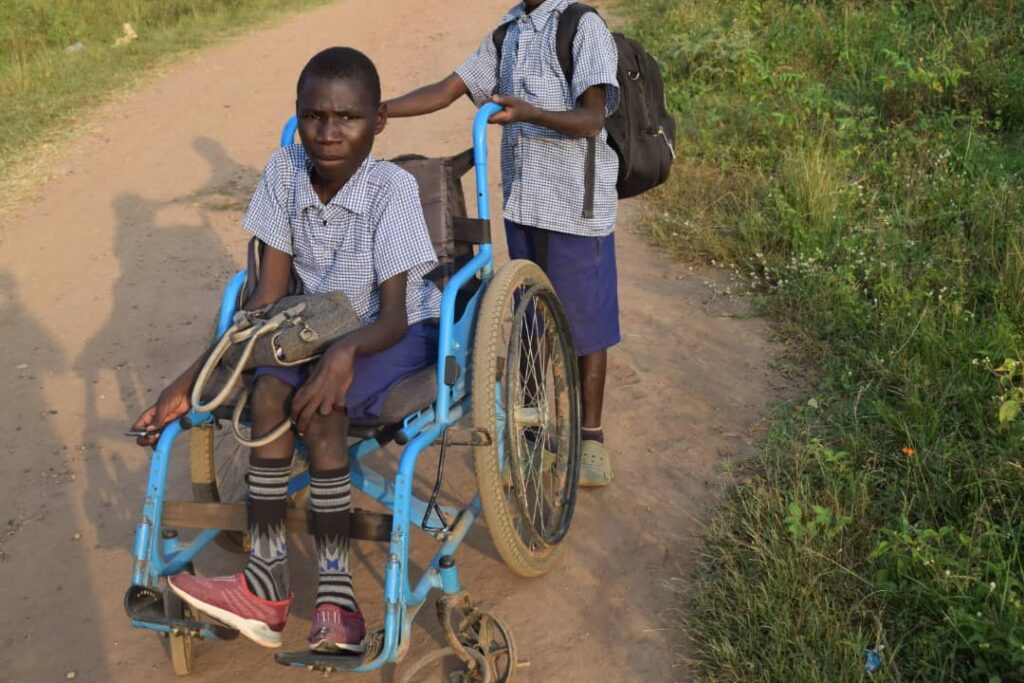
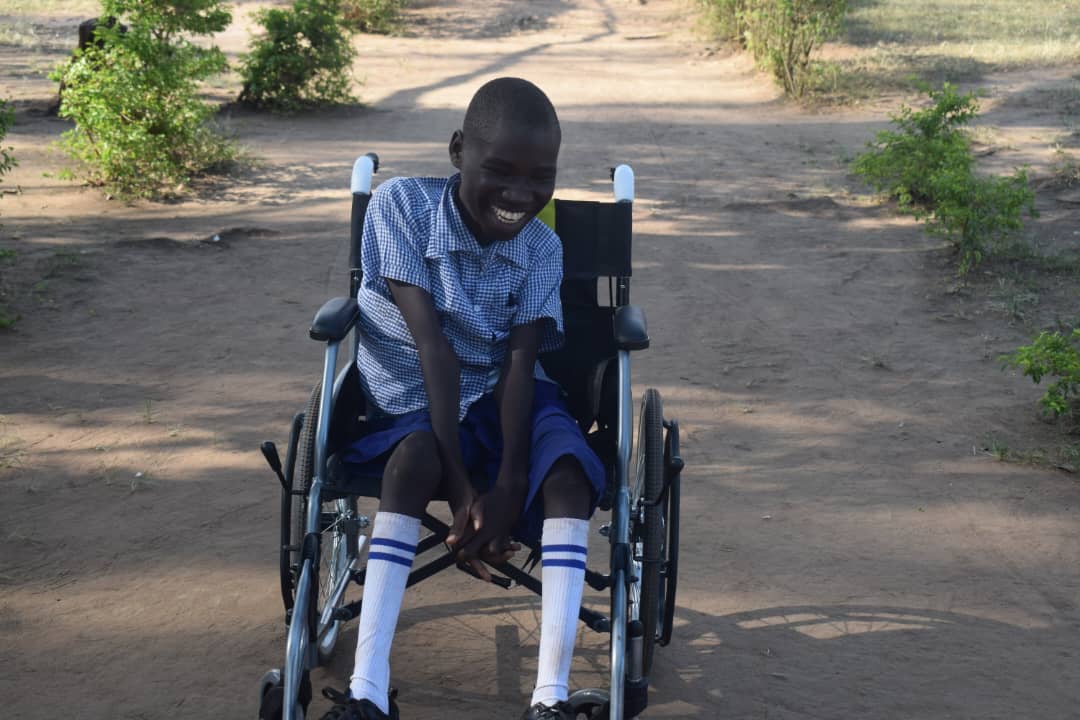
Meet Nyadriku Derrick, 16 — a Primary Six pupil at Ruva Primary School, Arua City, whose courage is bigger than any obstacle in his path.

38
Blood Transfusions
by age five

Derrick survived severe anaemia in his earliest years — a fight that shaped his body, steeled his spirit, and ultimately fuelled a dream to become a doctor who gives others the same chance at life.

Nyadriku Derrick was born healthy — a son who sat up, crawled, pulled himself to standing, and made his mother proud at every turn. But when it came time to take his first steps, life had other plans. Severe anaemia swept through his tiny body, and what followed were years of hospitals, blood transfusions, and a mother who refused to give up. By the age of five, Derrick had survived 38 blood transfusions. Physiotherapy sessions came and went, but a waist joint problem left him unable to walk. He has been in a wheelchair ever since.

And yet — Derrick rolls forward. Every single day.


Eight Children, One Mother, Infinite Love

Orphaned by his father, Derrick is the fifth of eight children raised by a single mother who stretches every shilling she has. School fees, books, a uniform — things most children take for granted are mountains Derrick’s family climbs every term. There are mornings when the odds feel crushing. But Derrick has something that no circumstance can take away: a dream. He wants to become a doctor. Not for the title. Not for the money. But because someone once fought hard enough to keep him alive, and he wants to spend his life doing the same for others.

“I want to help children like me — children who need someone to fight for them.”

— Nyadriku Derrick, Age 16 · Ruva Primary School, Arua City

When the Wheels Stopped Turning

There came a day when the wheelchair that carried Derrick to school broke down. Just like that, his world shrank. Getting to class became a battle. Attending sessions, participating in learning, being present — all of it suddenly uncertain. For a boy who had already fought so hard just to be in a classroom, this felt cruel beyond measure.

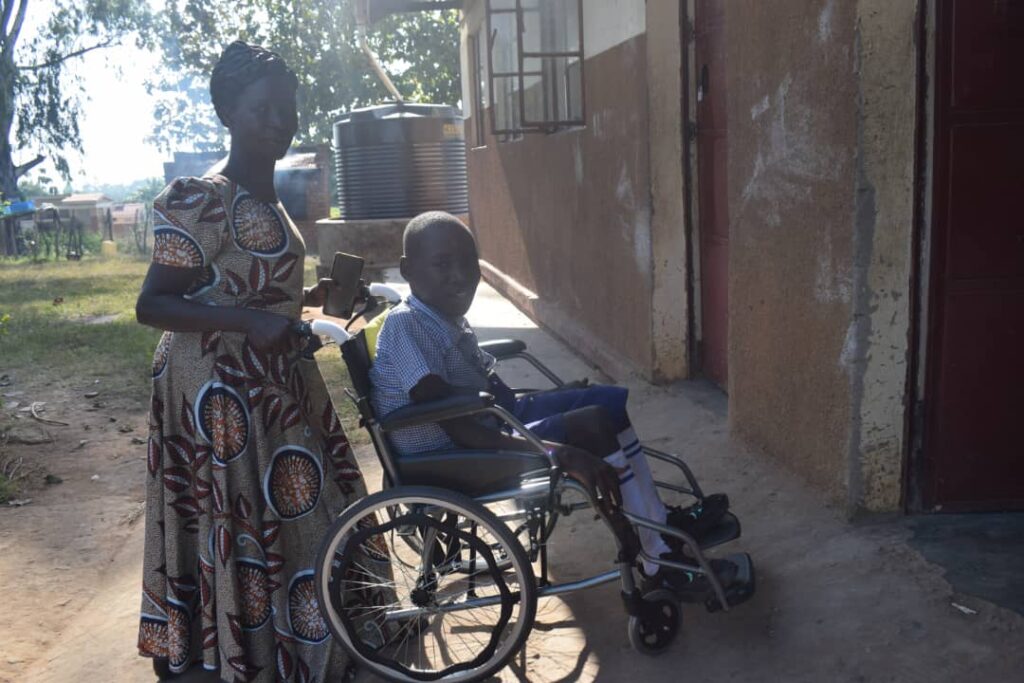
But Derrick was no longer walking this road alone. Through the Dream Achievers Program, Amani Initiative stepped in — and with it came a brand-new wheelchair. Not just any wheelchair. His wheelchair. A restored gateway to school, to learning, to the future he refuses to give up on. The wheelchair donation was not a separate gesture of charity — it was the program living out exactly what it promises: that no barrier, however physical or financial, will be allowed to steal a child’s education.
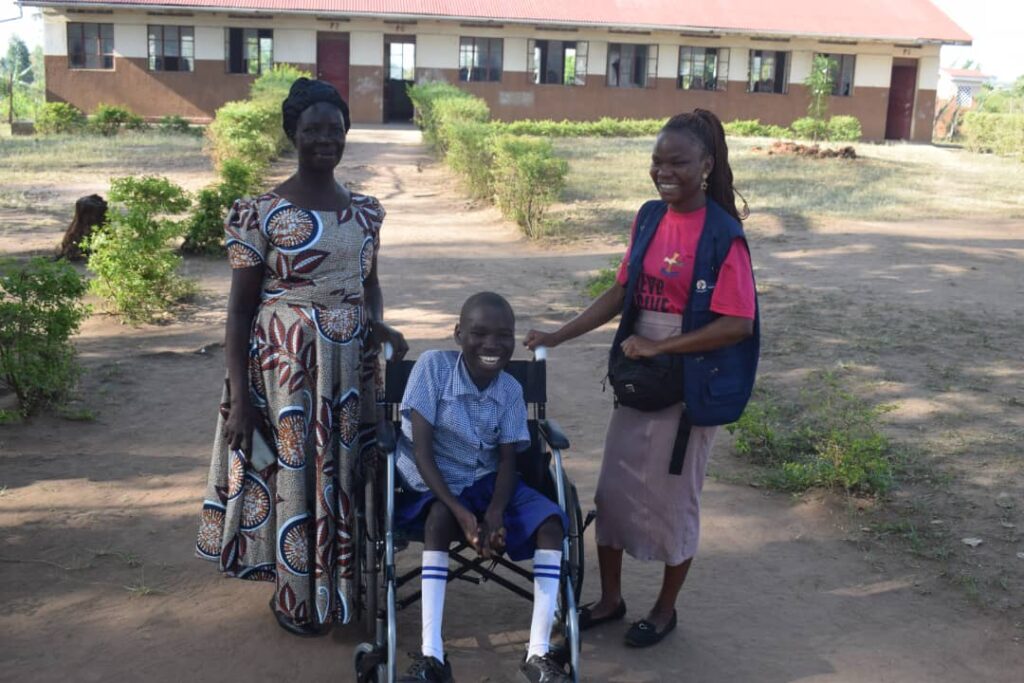
 

Dream Achievers Program in Action

The donation of a new wheelchair to Derrick is part of the holistic support the Dream Achievers Program provides. When his old chair broke down and school became unreachable, the program responded — because keeping Derrick in the classroom is not optional. It is the mission.

More Than a Program — A Journey of Becoming

Derrick is a proud member of Cohort 1 of the Dream Achievers Program — running from 2024 to 2026 and fully sponsored by the Girls First Fund under the Empowered Voices Project. What happens in those sessions goes far deeper than textbooks and test scores. The program is built around a simple but radical belief: that at-risk children do not just need academic support — they need to be seen, understood, and equipped for life in its fullness.

Uganda’s education statistics make clear why this matters so urgently:

Dream Achievers Program · By the Numbers
Tackling Uganda’s Primary School Dropout Crisis

Cohort 1 (2024–2026), sponsored by the Girls First Fund under the Empowered Voices Project, targets 30 high-risk learners per school — walking alongside them from Primary Four all the way through to Primary Seven with a holistic, child-centred approach.

43%
of pupils drop out before completing primary school
46.4%
of girls never reach Primary Seven
45%
of all primary learners fail to complete education
30
high-risk learners supported per cohort, P4 through P7
 
Girls are disproportionately affected — 46.4% drop out before P7, compared to 44.2% of boys.
 
The highest dropout risk occurs at the critical P4–P5 transition — exactly where this program begins its support.
 
The program operates in low-cost schools across Uganda, targeting the most vulnerable learners in underserved communities.

The program’s ten structured sessions do not just address dropout statistics — they build human beings. Each session meets children exactly where they are, and takes them somewhere greater:

Dream Achievers Club · Program Sessions
Ten Sessions. One Transformative Journey.
01
Welcome to the Club
Introduction to the Dream Achievers Club and building the group
02
Who Am I
Discovering identity, self-worth, and personal strengths
03
My Choices = My Actions = My Goals
Understanding how decisions today shape the future ahead
04
Changes as We Grow
Navigating physical, emotional, and social changes in adolescence
05
Healthy and Unhealthy Relationships
Recognising what safe, respectful relationships look and feel like
06
Mental Health — Let’s Talk It Out
Breaking the silence around mental wellbeing and emotional health
07
Knowing My Rights and Responsibilities
Empowering learners to know their rights and act with purpose
08
Child Marriage and Teenage Pregnancy
Protecting futures by addressing one of Uganda’s greatest barriers to girls’ education
09
My Opportunities, My Plans
Setting goals and mapping a clear, hopeful path forward
10
Starting Our Social Enterprise
Turning dreams into action — building something real together

For Derrick, each of these sessions has been more than curriculum — they have been conversations that see him as a full person. Not a patient. Not a statistic. A boy with a brilliant mind, a generous heart, and a future worth investing in.

“Now I can get to school again. I want to finish Primary Seven and become a doctor. I want to help children like me.”

— Nyadriku Derrick, Age 16 · Ruva Primary School, Arua City

Derrick’s story is not just one of survival. It is a story of a community choosing to show up — with a wheelchair, with sessions, with mentorship, and with the simple, powerful message that his life matters and his dream is worth chasing. That is what the Dream Achievers Program does. And Derrick is proof of what happens when it works.
Help More Children Like Derrick Stay in School

Support the Dream Achievers Program and ensure that no child — however great the obstacle — has to give up on their education.

Partner With Us → info@amaniinitiative.org
Categories Blog

How a school feeding program is changing the story of 1800 learners.

Amani Initiative · Empowered Voices Project

One Meal Changed Everything for 1,800 Children

How a community in rural Uganda turned a simple idea into a life-changing school feeding program.

1,800
Learners Fed
$2
Per Child, Per Term
20
Schools to Reach
65
School Days Per Term

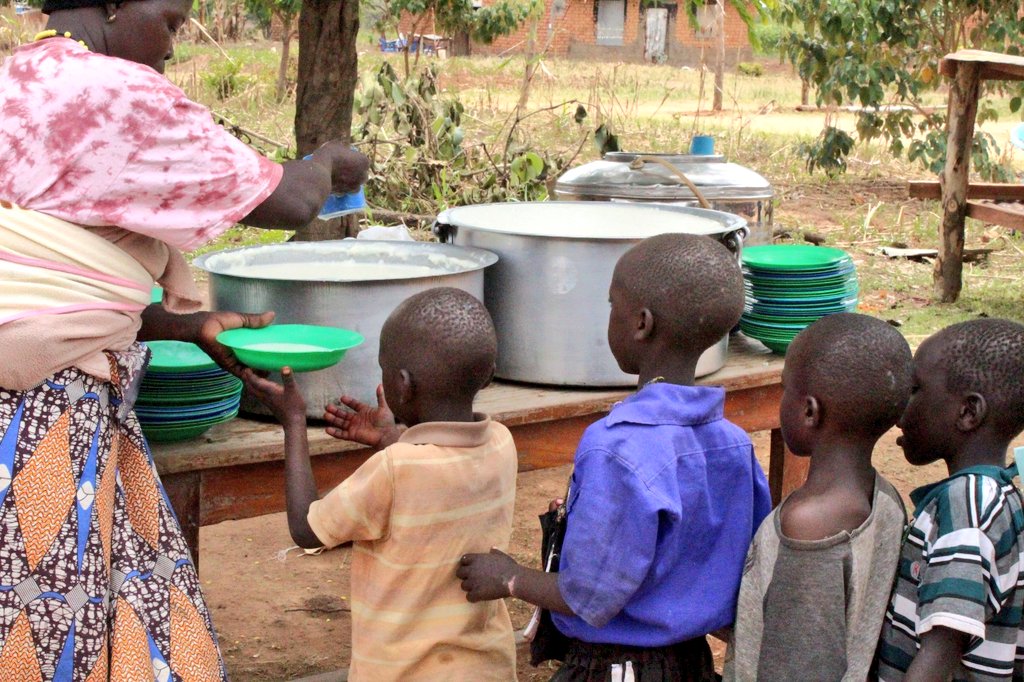
More than 500 kilometres from Kampala, in the quiet hills of Kijomoro Sub-County, something quietly extraordinary is happening every morning. Over 1,800 children arrive at Oribani Primary School in their uniforms — some having walked long distances — ready to learn. But not so long ago, many of those same children would disappear by midday, pulled away by a force more powerful than any teacher’s lesson: hunger.

The Silent Crisis in the Classroom

Uganda’s Universal Primary Education program provides a capitation grant of UGX 17,000 per child per year — roughly USD 1.50 per term. While this supports operational costs, it does not include meals. For families in Kijomoro, sending food to school was simply not possible.

The consequences were quiet but devastating. Learners missed school when there was no food at home. Others left at lunchtime and never came back. Those who stayed sat in class too hungry to concentrate, their potential slipping away one missed lesson at a time. Absenteeism climbed. Academic performance fell. Dropout rates rose. And for girls, the long unsupervised lunch break outside school created dangerous vulnerabilities — increasing the risk of early pregnancy and permanent dropout.

Research shows that school feeding programs can increase attendance by up to 8–9% in communities like this. At Oribani, hunger wasn’t just a welfare problem. It was an education crisis.

“Before the feeding program, many learners would disappear at lunchtime and some would not return. Others sat in class tired and unable to concentrate.”

— Ajuru Dorcus, Deputy Headteacher, Oribani Primary School

A Community That Refused to Accept It

Rather than wait for outside intervention, Oribani’s School Management Committee, the PTA, and the Old Boys and Old Girls Association came together and built something remarkable from within. They launched a community-supported school feeding program — structured, transparent, and entirely their own.

The cost to feed 1,800 learners for one 65-day term is UGX 6,700,000 — approximately USD 1,800. Just two dollars per child per term for a daily meal that keeps them in school. Parents contribute firewood. Alumni mobilise funds. Community members provide oversight. Local suppliers provide food, purchased in bulk at the start of term to stabilise prices. Designated cooks prepare meals on-site. Teachers supervise distribution and monitor attendance.

This is not charity. This is coordinated community leadership in action.

The Results Are Undeniable

Better Attendance

Learners are staying the whole school day — no more disappearing at lunchtime.

Stronger Focus

Teachers report better class participation and attentiveness across all grades.

Girls Protected

Supervised meal times remove the dangerous unstructured lunch break that put girls at risk.

Community Ownership

Built by the community, for the community — sustainable and rooted in local leadership.

“Before, when I felt very hungry, I would think about going home. Sometimes I could not understand what the teacher was teaching. Now we eat at school, and I can stay the whole day. I want to finish Primary Seven and continue to secondary school.”

— Primary Six Pupil, Oribani Primary School

In those words lies the entire truth of this program. A daily meal has become the difference between leaving and staying. Between falling behind and moving forward. Between a life half-lived and a future fully pursued.

A Model Ready to Transform 20 Communities

Oribani Primary School is one of Amani Initiative’s 20 partner schools under the Empowered Voices Project, supported through the Girls First Fund. The success of this community-led model has sparked a bigger vision: to scale this program to all 19 remaining partner schools across the region.

The investment case is powerful in its simplicity:

Feeds one school for a full term
$1,800
~USD 2 per child · 1,800 learners · 65 days
Feeds all 20 schools for a full term
$36,000
36,000+ learners · improved outcomes across the region

The return on that investment? Improved attendance. Stronger retention and academic performance. Greater protection for vulnerable girls. And communities who are more deeply invested in the future of their children’s education than ever before.

“We have seen what is possible when a community comes together. With more partners, we can ensure that no child at Oribani — or in the other schools — has to choose between hunger and education.”

— Ajuru Dorcus, Deputy Headteacher, Oribani Primary School

The most powerful intervention in education sometimes begins with something as simple — and as profound — as a daily meal. At Oribani, it already has. Now imagine what 20 schools could look like.

Support a School. Sponsor a Term. Change a Life.

Partner with Amani Initiative to bring this program to all 20 schools in our network. Every dollar feeds a child’s future.

Get in Touch → info@amaniinitiative.org
Categories Blog

The Girl Who Came Back


International Women’s Day 2026

The Girl Who Came Back

A personal story by Bakoko Gloria, Advocacy and Compliance Officer at Amani Initiative

By Bakoko Gloria | Advocacy & Compliance Officer, Amani Initiative | 6th March 2026
IWD 2026 Theme “Scaling up investments to accelerate access to justice for all women and girls in Uganda”

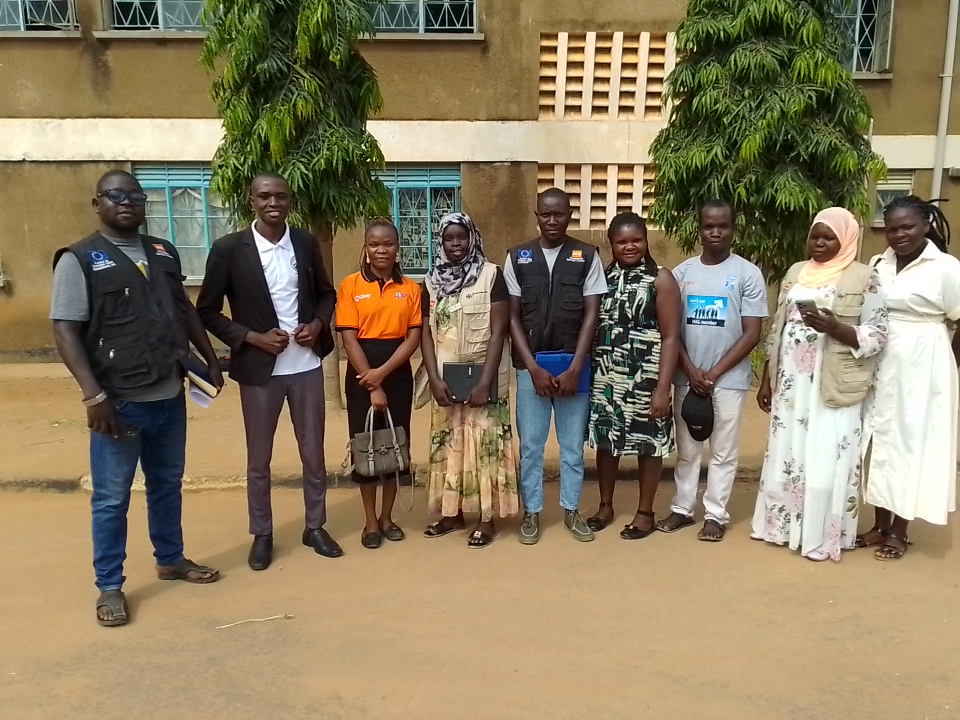
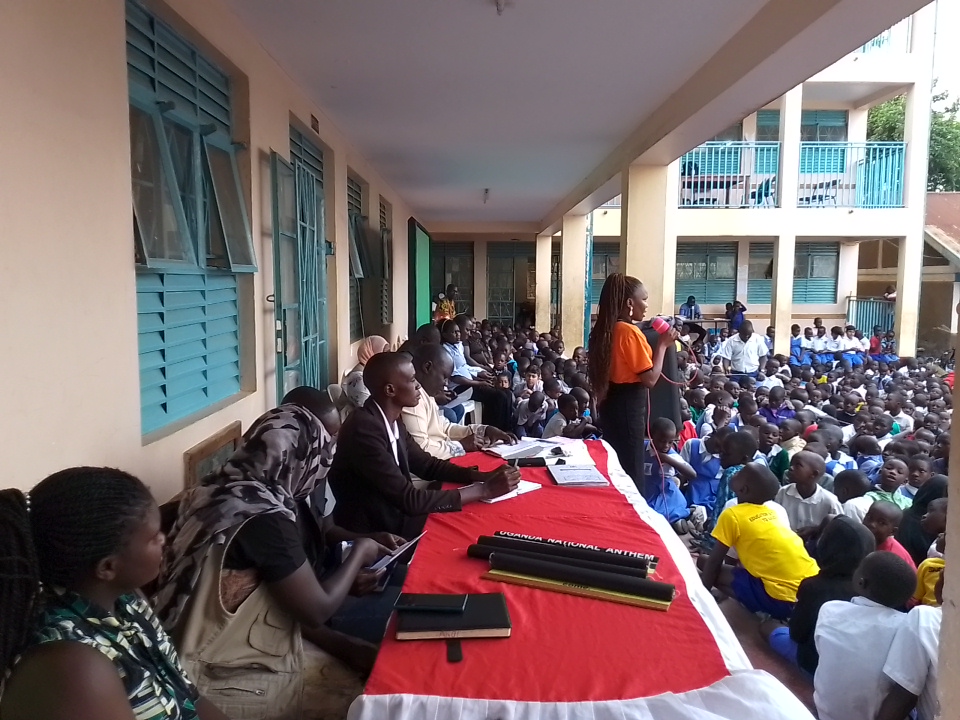
On 6th March 2026, I joined colleagues from the Norwegian Refugee Council (NRC) as lead partner — alongside Amani Initiative, where I serve as Advocacy and Compliance Officer, and fellow partners Red Net, CEFTRA, and SACE — for an education outreach at Arua Public Primary School.

We were there to speak to children about teenage pregnancy, child marriage, menstrual hygiene, and the rights every child in Uganda is entitled to. Over 800 pupils and more than 20 teachers filled the assembly ground that morning. What I did not tell anyone as we prepared to begin was that I already knew this ground. I had stood on it before — not as an advocate, but as a child. Arua Public Primary School is my former school.

800+
Pupils reached
20+
Teachers present
5
Partner organisations

I studied here from 2005 to 2011 — seven years, Primary One all the way through to Primary Seven. Walking back through those gates, I felt it all come back at once. The red dust. The particular noise of children gathering for a Friday assembly. The smell of the compound in the early morning. I have conducted many outreach sessions in my work with Amani Initiative, but the moment I stepped onto that ground, something settled differently inside me. This was not just another school visit. This was a homecoming.

“I looked at those faces and I saw myself — the girl I used to be, sitting right where they were sitting, carrying dreams I did not yet know how to name.”

This school gave me more than I realised at the time. I ran on this field during athletics season. I debated on Fridays, learning to stand up, choose a side, and make my voice carry across a room — a skill that sits at the very heart of the advocacy work I do today. My English teacher was the most passionate educator I have ever known. He pushed me every day to read newspapers and novels, to sharpen my spoken English, to never be satisfied with ordinary. That love of reading never left me. Neither did the confidence he poured into me. When I trace the line back to how I ended up fighting for children’s rights, representing Amani Initiative in communities across Northern Uganda, speaking truth to power on behalf of girls who cannot yet speak for themselves — it leads right back here. To these classrooms. To that teacher. To this ground.

And that made what I had come to say feel even more urgent. Because the challenges I spoke about that morning are not distant problems. They are the realities facing children in communities exactly like this one. In Uganda, 34% of girls are married before their 18th birthday. 1 in 4 teenage girls has already begun childbearing, and teenage pregnancy is the leading cause of death for girls aged 15 to 19 in this country. More than 30,000 girls become pregnant every single month. These are not numbers from somewhere far away. They are about girls who sit in assemblies just like this one, in schools just like this one, with futures that can still go either way.

The Reality for Girls in Uganda

34%
of girls married before age 18 — 7% before age 15 UNICEF, 2020 — Joy for Children Uganda, 2024
25%
of girls aged 15–19 have begun childbearing; teenage pregnancy is their leading killer UBOS Uganda Demographic and Health Survey, 2022
30,000+
teenage girls become pregnant every month in Uganda UNFPA Uganda, 2021

When it was my turn to speak, I put the programme notes aside. I told them my story instead. I told them about growing up in this school, about the teacher who refused to let me be ordinary, about what education opened up for me that nothing else could have. I spoke about what Amani Initiative does — showing up in communities before harmful practices take root, equipping young people with knowledge of their rights, and walking alongside those who need guidance. I explained, as honestly as I could, what peer pressure, poverty, and silence can steal from a young person. And I told them that their current circumstances were not their final answer.

Then something shifted. Word moved through the assembly — quietly at first, then with unmistakable excitement — that I had studied at this very school. That the woman at the front, the one from Amani Initiative, had once sat exactly where they were sitting. I watched it travel across their faces. And the distance between who I was and who they could become simply disappeared.

“She also studied here like us… I believe I can grow up, finish school, and one day come back to inspire others too.”
A young girl at the assembly
“I now understand why it is important to respect girls and support them to continue with their education.”
A boy at the assembly

When I heard those words, I had to take a breath. That is exactly why Amani Initiative does this work. Not just to inform — but to make a child believe. The moment someone looks at you and thinks if she could, maybe I can too — that thought can change the entire direction of a life.

I left that morning with my heart full and a standing invitation from the school administration — for Amani Initiative to return for continued mentorship sessions, and for me personally, as an Old Girl, to come back regularly to the assemblies. One outreach became a relationship. One morning became a beginning. That school gave me a foundation decades ago. Coming back gave me the privilege of helping to build the same foundation for the children still sitting in those classrooms — and reminded me, more powerfully than I expected, why this work is worth everything we give to it.

“Their circumstances do not define their future. With education, with guidance, and with people who believe in them before they believe in themselves — they too can write a different story.”

Amani Initiative — Rooted in Community, Committed to Change

Amani Initiative works at the intersection of advocacy, child protection, and community empowerment across Northern Uganda. We believe the most powerful change happens when communities see their own people — shaped by the same schools, the same streets, the same lived realities — standing up for children’s rights. Gloria’s return to Arua Public Primary School is not an exception to how we work. It is exactly how we work.

This outreach reached over 800 children in a single morning, and the school has already invited us back. Every moment a child thinks maybe I can too is made possible by the partnerships and funding that keep Amani Initiative present in communities. Your investment sends people like Gloria back to the schools that shaped them — so the next generation gets the same chance she did.

Every Girl Deserves a Full Story

No girl’s story should end in a classroom she was forced to leave. With the right investment, the right partners, and advocates who truly belong in the communities they serve — change is not just possible. It is already happening. Partner with Amani Initiative to keep it going.

Outreach Partners
The Norwegian Refugee Council (NRC) — Lead Partner Amani Initiative Red Net CEFTRA SACE

References

  1. Joy for Children Uganda (2024). Child Marriage in Uganda: Legal and Policy Gaps. Citing UNICEF 2020. joyforchildren.org
  2. Uganda Bureau of Statistics (UBOS) (2022). Uganda Demographic and Health Survey 2022.
  3. UNICEF Uganda (2023/24). Uganda Annual Health Sector Performance Report. unicef.org/uganda
  4. UNFPA Uganda (2021). The Cost of Inaction on Teenage Pregnancy. uganda.unfpa.org
Categories Blog

Give to Gain: Gladys’ Story Shows the Power of Investing in Girls

Give to Gain: Gladys’ Story Shows the Power of Investing in Girls

A Dream Interrupted

The Power of Guidance

“Many of these girls feel like their dreams ended when they became mothers,” Agnes explains. “But when they receive guidance and support, they begin to believe in themselves again and start planning for a better future.”

Inspired to Try Again

Giving to Gain

Girls gain confidence.
Families become stronger.
Communities grow more resilient.